Lore:Dwemer

The Dwemer (/ˈdwɛ.mɜːr/ dwe-mer, /ˈdweɪ.mɜːr/ dway-mer, or /ˈdwi.mɜːr/ dwee-mer), (literally 'the Deep, or Deep-Counseled or Secretive People, people of the deep), are a fabled "Lost Race"[1] of Mer from Dwemereth, which mostly consisted of modern-day Morrowind, where they are believed to have been the most prolific, though they also had a strong presence in Hammerfell, High Rock, and Skyrim.[2][3]
The races of Mer use the term "Dwemer", which translates to Deep-Elves[2] or Deep Folk[4] and connoting variously with deep-delving, profound, and close-counseled; Imperial usage is Dwarven, derived in fable from the affectionate regard of the Giant races for their 'little' Dwemer friends. These Giants have been speculated to be Ehlnofey or the more common Giants.[5][6]
The early history of the Dwemer is still clouded in mystery. There is no known story of their dissociation from the Aldmer, which must have occurred very early in Tamrielic history, as their society bore few correlations with that of the Altmer besides some similar legal principles.[7][8][9] According to some legends, the Dwemer originated from the same group as the Chimer, and were treated as another tribe, and later, as a secular Great House.[10][UOL 1][UOL 2] Other sources however claim they already occupied the northeast of Tamriel when Veloth and his people arrived there.[9]
The Dwemer built elaborate underground cities near and beneath mountain ranges, including the Velothi Mountains and Red Mountain, and in the mountains of the isle Stros M'Kai. Many misconceptions about them have abounded for centuries: scholars long thought that most Dwemer ruins which dotted Tamriel outside Morrowind were mere outposts and that there were few significant Dwemer settlements elsewhere until 1E 420.[2] The presentation of the Dwemer in fictitious but popular novels like the Ancient Tales of the Dwemer has also lodged an inaccurate impression of them in the popular consciousness, painting them as familiar, comfortable characters who were very similar to humans.[11] In reality, they are better described as having been fearsome, unfathomable, and even cruel, though also careful, intelligent, and industrious.[12][13][14] Their society consisted of free-thinking yet reclusive clans devoted to the secrets of science, engineering, and the arcane until they mysteriously disappeared around 1E 700.[2] There are a number of theories on how this happened, though none of them can be confirmed.
History[edit]
Dwemereth and Resdayn[edit]

The history of the Dwemer is mostly a record of their conflicts with other races and each other, and the timeline is imprecise for many of these events. They purportedly settled along the coasts of Morrowind and founded Dwemereth.[7] During the Dawn Era they researched the death of the Earth Bones, or what is now known as the laws of nature, dissecting the process of the sacred willing itself into the profane.[15] They became involved in clashes with the newly-arrived Chimer in the Late Middle Merethic Era over land, resources, and religion.[16] Dwemeri culture was agnostic and preferred reason to faith, while the Chimer were staunch Daedra-worshippers.[7] However, the Nordic invasion of present-day Morrowind around 1E 240 led by High King Vrage the Gifted brought a common enemy the Chimer and Dwemer could unite against.[7][17] Although the Nords conquered all of mainland Morrowind and absorbed it into their First Empire, they never succeeded in subduing the Dwemer Kingdom of Vvardenfell, which remained independent and strong.[18] Amidst the Nords' occupation, Dumac Dwarfking and Indoril Nerevar forged an alliance which ultimately succeeded in repelling the invaders in 1E 416, leading to the establishment of the First Council and the joint Dwemer-Chimer state of Resdayn.[7]
Westward Migrations[edit]
In 1E 420, the Rourken clan opposed the accord with the Chimer and chose self-exile.[5][19] Their chieftain is said to have thrown the Volendrung Hammer across Tamriel and led his clan to wherever the hammer fell, an image which has been depicted in a number of ruins in Hammerfell. The Rourken named the land "Volenfell," which later was somewhat mistranslated to "Hammerfell".[5] However the Dwarves of Hammerfell eventually a faced an otherworldly invasion from a new breed of giant goblins, who invaded via a rent in space and time known as the Goblin Gate.[20][UOL 3] They possessed a huge army of fighters, and appeared in the middle of the province, where they would pillage and raze towns to the ground, driving the Dwarves out of the province.[20][UOL 3]
In the following decades, Clan Kragen decided to follow in Clan Rourken's footsteps and migrated west into Skyrim to establish new holdings of their own.[21] Arkngthamz became the first Dwemer city-state in Skyrim, and its reputation for flourishing despite constant attacks from the Nords encouraged other Dwemer clans to expand westward. A number of these clans soon formed a loose alliance of four city-states that was regarded as unassailable. Clan Kragen later established a sister-city, Arkngthamz-Phng, in the Dragon's Teeth Mountains, which replaced Arkngthamz as the clan's seat of power.[21] Numerous Dwemer holdings and city-states soon dotted Skyrim from the Velothi Mountains to Markarth in what is now The Reach.[3] The city-states burrowed deep underground, masking their true size, and several of them were linked by the gargantuan cavern known as Fal'Zhardum Din.[22] The Dwemer in Skyrim prospered for a time, but this prosperity proved to be short-lived. The city-states discovered deposits of Aetherium in their deepest delvings, and Arkngthamz led the research program to develop technology to harness Aetherium's power. The resulting Aetherium Forge produced Aetherium artifacts of such immense power that the Dwemer alliance immediately shattered, and the four city-states and their rivals went to war over control of the Forge. After decades of conflict, the Dwemer were weakened to such an extent that Nordic armies commanded by High King Gellir finally succeeded in conquering them in three short years; a century would pass before the Dwemer mustered the strength to reclaim their lost lands.[23]
Later Conflicts[edit]
Sometime after the Alessian Slave Rebellion,[24] various Ayleid kingdoms launched a desperate search for the fabled Wrathstone, which they believed would lead them to a weapon that would be their salvation against the encroaching forces of the Alessian Empire. An expedition marched to the Dwemer city of Mzulft, in the hold of Eastmarch in Skyrim, where it was rumored the Wrathstone was held. The Ayleids besieged Mzulft, but failed to breach it or retrieve the artifact.[25] At the time, the Ayleids were unaware that the Dwemer only possessed the left half of the Wrathstone, and that half was stored not at Mzulft, but at the nearby Kagrenzel.[25] The famed Dwemer architect Mhuvnak left Mzulft for Kagrenzel immediately after the attack to retrieve the artifact, realizing that it may need to be better guarded. It is thought that he found the defenses of Kagrenzel inadequate, and built the Vault of Mhuvnak to house it instead. Long after the time of Mhuvnak, following Mzulft's temporary fall to the Nords and subsequent reclamation by the Dwemer, the Vault of Mhuvnak was buried in a mountain of ice and lost. The Dwemer of Mzulft attempted to use their Oculory to locate the "Frostvault", but no record of the results of their search was found, and the left half of the Wrathstone was not reclaimed.[25]
Meanwhile, the Dwemer in Skyrim had also planted the seeds of another crisis by taking in the Snow Elves. While King Harald was credited with driving the last of the "elves" out of Skyrim before the end of his reign in 1E 221, pockets of them survived in the wilderness and eventually sought sanctuary with the Dwemer. Although they agreed to provide the Snow Elves safe haven in their underground realm, the distrustful Dwemer rendered them blind by forcing them to consume toxic fungi once found growing deep underground. The Snow Elves became servants of the Dwemer, and then, after several generations, degenerated into their corrupted slaves, the Falmer.[26] After generations of subjugation, the Falmer rebelled, leading to the War of the Crag, a bloody conflict that was waged far below the surface while the Nords above remained oblivious. The war lasted decades and only ended when the Dwemer vanished.[26]
Disappearance of the Dwemer[edit]

The Dwemer inexplicably disappeared during the Battle of Red Mountain, the biggest and final battle of the War of the First Council.[7] This purportedly came about due to the efforts of Lord Kagrenac, who was the Chief Tonal Architect of the Dwemer responsible for designing the great freeholds of their Second Empire.[27][nb 1] Kagrenac constructed Kagrenac's Tools to harness the powers of the Heart of Lorkhan, which the Dwemer had discovered beneath Red Mountain. When the Chimer found out, they considered this aim blasphemous and sought to stop it. Kagrenac's exact goal remains unclear, but it is believed he sought to heighten his race to Anumidium.[28] The disappearance of a whole race in an instant sparked many theories,[7] but is generally thought to have followed this attempt to use the tools on the Heart,[29][27] and simply coincided with the war.[15] It appears that the Dwemer were conflicted on their use of the Heart. Some opposed its use, warning that massive side effects were likely, while the majority of the Tonal Architects, including Kagrenac, and Bthuand Mzahnch (who wrote The Egg of Time which downplayed the risks of tampering with the Heart of Lorkhan) wished to proceed.[27]

It appears that all members of the Dwemer race were simply removed from the world. When the previously untouched Dwemer ruins of Bamz-Amschend in Mournhold were rediscovered, numerous piles of ashes were present next to weapons and armor, on chairs, and in beds, suggesting the Dwemer's bodies were suddenly reduced to ash in some way. Dwarven ghosts, often encountered in the ancient abandoned Dwemer ruins, aggressive revenant spirits of Dwemer that are present the mortal plane.[30] The dwarf Yagrum Bagarn, however, is the last known living being of his kind. He returned to Tamriel from his journey in the Outer Realm, and came to discover his people missing. In 4E 201, Arniel Gane, a researcher at the College of Winterhold in Skyrim, attempted to recreate the circumstances of the Dwemer's disappearance after obtaining Keening, one of Kagrenac's Tools, but vanished suddenly in the process, strengthening the theory that Kagrenac's use of the tools was the cause of the disappearance. Some scholars still resist the notion that the Dwemer disappeared all at once.[14]
A theory also exists that their sudden extinction was caused by their reversal of the usual processes involved in the creation of the Earth Bones, the laws of nature. Rather than creating the profane by commanding the sacred, such as in Conjuration magic or Daedra worship, they sought to create Anumidium, their own sacred, from the "deaths of the profane".[15] Vivec, the warrior-poet god of the Dunmer, similarly believed that the disappearance of the Dwemer is in some way owed to their "divine sin"—attempting to create a god for their own purposes from the remains of the god Lorkhan.[31] Whether their use of Kagrenac's Tools in this process or simply their intentions resulted in their extinction remains unclear in this theory.
The Tribunal Temple and Ashlanders, both assert that Nerevar, with the help of Azura, utilized the Heart of Lorkhan to make the Dwemer disappear.[32][33]
It is implied by the Khajiit the events that led to the Dwemer's disappearance have had something do with time being shattered, and those who have used Numidium have not woken up to the reality of what really happened to the Dwarves.[34] The 36th Sermon of Vivec states Kagrenac had managed to activate Numidium and used it against the Chimer armies, and in this account Ayem, Seht and Vehk managed to come together to defeat the Walking Star, causing the Dwemer to be removed from the world.[35] Each time the device has been activated a Dragon Break has occurred and this could explain many of the conflicting events and accounts of what had happened during the Battle of Red Mountain.[34] The Nordic account of the events have Lorkhan wreaking vengeance upon the Dwemer for their hubris, and that they would die by his hand.[36]
A few theories about the Dwemers' disappearance emerged from the popular Ancient Tales of the Dwemer books, such as the idea that the Aedra and Daedra, offended by the Dwemers' religious skepticism, played a part in the disappearance[37], or that the Dwemer, frightened by Azura, whose nature they couldn't understand nor control, hid from her sight by adopting Altmeri or Chimeri cultures and would still be alive in modern days.[38] However, these books are actually fictional, adapted from various non-Dwemer tales with little historical accuracy and written by Gor Felim under his pseudonym Marobar Sul.
Culture[edit]
Technology[edit]

The Dwemer appear to have been a highly technologically advanced and particularly dogmatic race. Other races have still not cracked the secret behind their metal.[3] Their weapons were simple but effective; weaponsmiths relied on creating quality materials first and merely allowed the form of those materials to flow from the method of the weapon's use. Their mastery of steam and geothermal power through tapping into the natural lava sources under Morrowind allowed them to create airships, sentient machines, mechanical observatories, and lighting systems that continued to work for centuries without any maintenance. Most of their settlements are still inhabited by Animunculi, enchanted mechanical guardians, commonly known as "Centurions" or "Spheres".[1] They appear somehow linked to their place of origin and will lose power if removed from the vicinity.[39] This may explain why many Animunculi remain active even after so long and supports the theory that they are strongly influenced by magic. Additionally, it appears that some Animunculi are capable of interpreting the actions of people around them - in a sense, 'perceiving' their intent - and responding accordingly.[40]
The Dwemer were somewhat comforted by their ability to empower lifeless fabrics into active beings through systematic regression techniques, denying the organic power of the gods while at the same time transcending the mortal systems of life.[15] This culture, often seen as sheer arrogance by others, allowed their technological capabilities to accelerate well ahead of any other race. In addition, the Dwemer also appear to have dabbled extensively and somewhat successfully in some of the more divine (or arcane) arts and sought to harness the supernatural powers of the Divines within their mechanical technology, even keeping an Elder Scroll within the massive underground complex of Blackreach in Skyrim.[41]
The Dwemer had headgear known as Dwarven Miters,[42][43] which gave them the ability that was known as "The Calling", which seems to have been similar to telepathy.[44][45] It allowed the Dwemer to communicate with each other over great distances. Three known varieties of miters exist, with the master miter being worn by the "Tuathumz" or "central pylon" of their Thought Calling system. It contains three finials thought to be broadcast-foci.[46] The spiked miter has spikes believed they actually functioned as "etheric antenna," helping with long-distance Thought Calls.[47] The common visor miter lacks these features. It has been suggested that, in the last moments before they disappeared, Lord Kagrenac used The Calling to summon all of the Dwemer people and rally them to carry out his plans to transcend the Mortal Plane.[44] Whether this was related to their demise or not is uncertain.
-
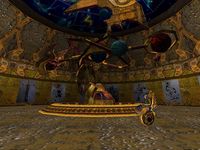
A Dwemer Orrery, as seen in Redguard
-
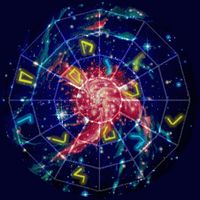
A Dwemer star chart
-
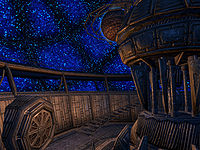
A Dwemer Orrery, as seen in TES IV: Oblivion
-
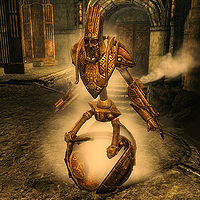
A Dwemer Animunculus, as seen in TES V: Skyrim
-
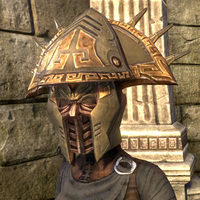
Dwarven Spiked Miter
-
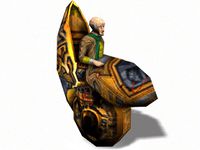
Hovering dwemer chair
-
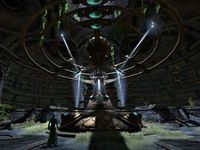
An Orb of Illumination


Language[edit]
Very little is known about Dwemeris,[48] the Dwemeri language, but there have been many attempts to translate it using Aldmeris for reference and comparison. Some Dwemer books, especially records dating from after the founding of Resdayn, were written in Aldmeris, making them accessible to modern scholars. However, even in Aldmeris, many Dwemer terms remain uncertain. As the books and other artifacts in Dwemer ruins rarely show signs of wear or age, leading some to believe that the Dwemer knew of a preservative effect, perhaps a device still active which denies or controls the Earth Bones governing time and decay.[15] Several different, incomplete styles of written Dwemeris appear throughout Tamriel. The glyphs found in the ruins on Stros M'Kai differ significantly from those found in Cyrodiil and Morrowind, which suggests there may have been dialects or variations across the Dwemer clans. Some of spoken Dwemeris remains in prefixes and suffixes in historical names, such as "Volen-", meaning "hammer", and "-Fell" meaning "city", giving Volenfell; "City of the Hammer".[5]
Architecture[edit]


The Dwemer lived in strongholds,[10] often called Freehold colonies[49] or city-states,[23] which are typically laden with ancient steam-powered contraptions, many of which are still running. They are thought to have delved down to a certain threshold in the ground, known as a "Geocline", before they began building the vital structures of a colony.[22] There are hundreds if not thousands of Dwarven buildings made of precise square shapes, but far fewer examples of rounded or curved stonework, suggesting the Dwemer favored well-calculated designs based on angled lines rather than riskier, more imprecise calculations using arcs and curves.[3] Numerous pipes can be found in and around Dwemer ruins, and many devices and constructs appear to emit steam from their inner workings. There may be "boilers" or similar components housed inside the Dwemer Centurions. It has been speculated that the constructs are powered by some kind of checkpoint in each ruin, or possibly by the combined signal of every ruin's mechanics, but this is not certain. There seem to have been regional differences in architectural and engineering styles; for instance, the prevalent style among northern clans is now known as "Deep Venue", wherein several structures are built within natural caverns. Arcanex are smaller, largely above-ground structures that are believed to have been research centers of some kind, though little is known about them thanks to looters. Animoculotories are Dwemer factories found within many strongholds.[50]
Dwemer constructs taken from Vvardenfell, where many Dwemer ruins are present, appear to shut down when a certain distance between them and Red Mountain is reached.[39] It also seems that many objects which may be found in ruins were once covered in mesh or cloth, which has decayed over the years. This would explain why the "home comforts" of the Dwemer may seem very spartan to a visitor. There are also few large halls in most ruins. This could be due to the fact that most if not all Dwemer ruins are underground, where large interior spaces are difficult to fashion at best. Many Dwemer colonies were named after their rulers. The largest concentration of strongholds is in Vvardenfell (which translates as "City of the Strong Shield" in Dwemeris). Many Redguards in Hammerfell have shown a particular interest in the Dwemer ruins there for unknown reasons.
Appearance[edit]

Contrary to many legends, archaeological evidence of known Dwemer ruins leads one to believe that they were about the same size as the typical human or elf, evidenced by the fact that all existing Dwarven armor is average sized (although some claim that "Dwarven armor" is either the outer shells of machines or mismatched pieces from various devices).[51] According to fable, the moniker "dwarf" may have been given long ago by the giants to their "little" friends.[52] Imperial excavation of Dwemer ruins supports the Dlyxexic theory that the translation of Dwemer as Deep Elves might also be read as Smart Elves. Indeed, perhaps the brilliant students of the Ehlnofey mentioned in The Anuad are the Dwarves themselves.[5] Purported descriptions of the last living Dwemer cannot be relied upon, as he was admittedly bloated and deformed by Corprus, and the only other visual examples come from sculptures and Dwarven Spectres found in their ruined dwellings. It can be deduced, however, that long beards were popular among the lost elves, and they preferred heavy metal armors and robes. Their remaining features could be described similarly to that of the other elven races, as no specific information exists.
Philosophy[edit]
It is unknown whether the Dwemer worshipped any gods. However, it is known that they despised and scorned the Daedra, and mocked the "foolish" rituals of their followers, "prefer[ring] instead their gods of Reason and Logic".[28] These may be metaphorical or literal terms; Vivec, the author, capitalized them in his writings which could be interpreted as an emphasized admonishment of their idolatry by means of substituting spiritual worship with absolute faith in those ideas. It could also be meant to suggest some sort of deified representation of those ideas or aspects of Dwemer thought. Since the Heart of Lorkhan offered some form of shared spiritual link among the Dwemer attuned to it - this could also refer to the collective reason and logic of the Dwemer people given voice through the powers of Tonal Architecture and the heart of a dead god. The Dwemer religion, if it can even be called that, is said to be one of the most complex and difficult puzzles of Dwemer culture.[53][54] Dwarven temples are known to exist, such as the one located deep in the mines of Fang Lair.[55] According to the ancient engravings Dwarven executioners were known as "Chun Abakch". They were known to always conceal their features under a hood of black spidersilk, a material that was also used for funeral shrouds.[56]
Artifacts[edit]
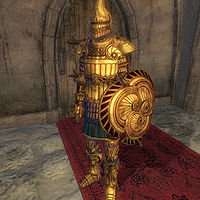
Dwemer artifacts are highly prized throughout the Empire for trade and collecting. However, Imperial charters state that all Dwemer artifacts are the property of the Emperor.[57] The trade[58] and extraction of Dwemer artifacts is forbidden under Imperial Law.[57] Everything from armor to housewares is greatly sought after, and smugglers will risk execution if caught for such a profitable trade.[52] Dwemer weapons and armor are especially valued, renowned for their excellent craftsmanship and sturdy design.[59] The Coldsnap Riekling tribe is notable in that they have appropriated many of Dwemer artifacts.[60]
Dwarves are known to have kept pets and outfitted and augmented them with Dwarven armor and mechanisms, as evidenced by the still-extant animals such as Dwarven Armored Mudcrabs and Dwarven War Dogs that are fitted with Dwemeri mechanical armor.[61][62]
-
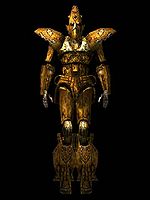
Dwemer armor, as seen in TES III: Morrowind
-
Dwemer armor, as seen in TES IV: Oblivion
-
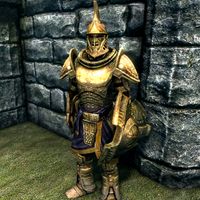
Dwemer armor, as seen in TES V: Skyrim
-
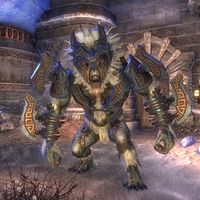
A troll, outfitted by rieklings with Dwemer armor (ESO)
-
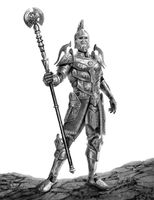
Dwemer armor
-
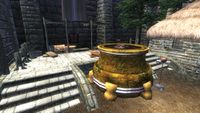
Antique Dwemer forge


Notes[edit]
- Little is known of the Second Empire of the Dwemer. The Second Empire is mentioned in TES III: Morrowind by Yagrum Bagarn, the last living Dwemer. An available excerpt of Guylaine's Architecture of the Second Empire discusses common defenses and approaches to Dwemeri structures which were built during the time of the Second Empire.
- Falion, a Redguard wizard of the Fourth Era, claimed to have seen the Dwemer while walking the planes of Oblivion.[63]
See Also[edit]
- Dwemer Names
- Dwemer Language
- For a list of notable Dwemer, see here.
- For game-specific information, see the Morrowind, Skyrim, Elder Scrolls Online
 , and Legends articles.

Books[edit]
- The Aetherium Wars by Taron Dreth — A treatise on the collapse of Dwemer city-states in Skyrim
- Ancient Tales of the Dwemer by Marobar Sul — An incomplete series of fictional stories about the Dwemer
- Antecedents of Dwemer Law — A historical account of the development of Dwemer law and custom from its roots in High Elven culture
- Arkngthamz-Phng by Neramo — A history of the Dwemer Clan Kragen's expansion into Skyrim
- Chronicles of Nchuleft by An Anonymous Altmer — A historical chronicle of events in the Dwemer Freehold Colony of Nchuleft
- Crafting Motif 15: Dwemer Style by Raynor Vanos — A guide to crafting armor and weapons in the Dwemer style
- Dwarves by Calcelmo, Scholar of Markarth — A scholarly work on the culture and history of Dwemer
- Dwemer History and Culture by Hasphat Antabolis — A scholar's review of the Dwemer essays written by Marobar Sul
- Dwemer Inquiries by Thelwe Ghelein, Scholar — A series of scholarly essays on the elusive Dwemer
- Guylaine's Architecture by Guylaine Marilie — Guylaine Marilie's outdated summary of historical Dwemer architecture
- Nchunak's Fire and Faith by Nchunak — Nchunak's journey among the Dwemer and his attempts to understand the teachings of Kagrenac
- Ruins of Kemel-Ze by Rolard Nordssen — An archaeologist's adventure through ancient Dwemer ruins
- Secrets of Dwemer Animunculi — Diagrams of a Sphere Centurion in various stages
- The War of the First Council by Agrippa Fundilius — A brief account of a First Era religious conflict
- In the Dwarven language:
-
- Divine Metaphysics — An explanation of Anumidium's construction, written in Dwemeris
- The Egg of Time by Bthuand Mzahnch — A refutation of a popular theory among the Dwemer that the use of Lorkhan's Heart involved unjustifiable risks
- Hanging Gardens — A travel guide to the Hanging Gardens of Wasten Coridale, written in both Dwemeris and Aldmeris
Gallery[edit]
-
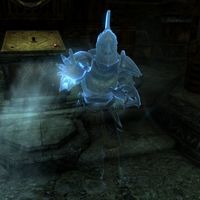
A Dwarven ghost (Skyrim)
-
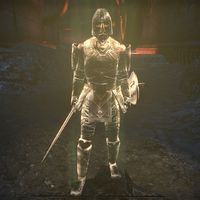
Dwemer spectre (ESO)
-
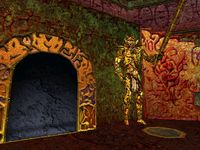
Dwemer Statue
-
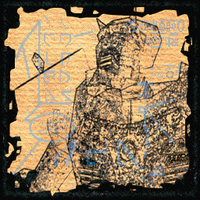
A Dwemer banner with writing, as seen in Redguard
-
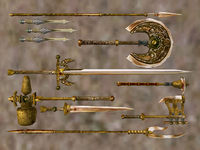
Dwemer weapons, as seen in Morrowind
-
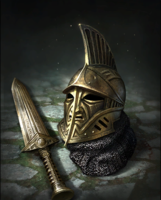
Dwemer helmet and sword
-
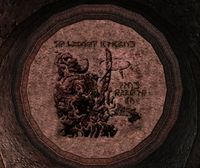
A Dwemer door from Morrowind
-
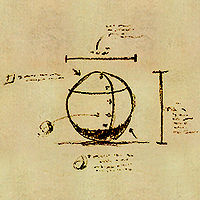
Animunculi schematic
-
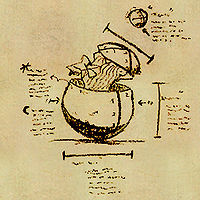
Animunculi schematic
-
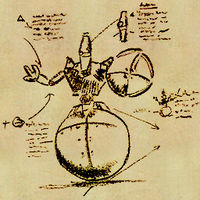
Animunculi schematic
-
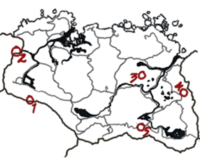
A crude map of First Era Dwemer kingdoms in modern-day Skyrim
-
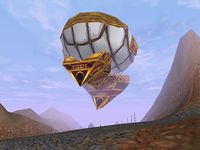
A Dwemer airship
-
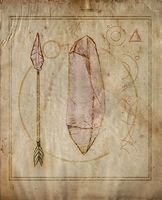
A Dwemer diagram of a soul stealer arrow and soul gem
-
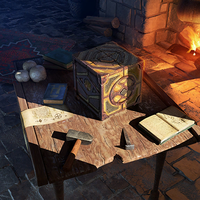
Dwemer puzzle box
-
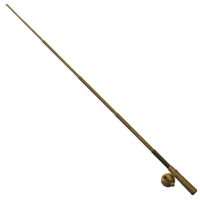
Dwemer fishing rod
-
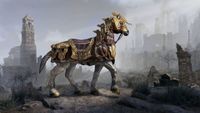
A horse equipped with Dwemer horse armor
-
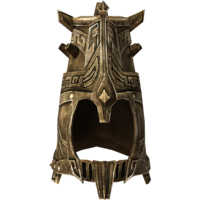
A Dwemer crown
-
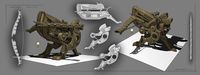
Dwemer Ballista
-
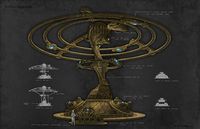
Dwemer Puzzle
-
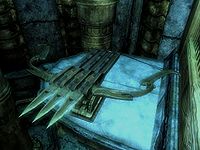
Dwemer Ballista
-
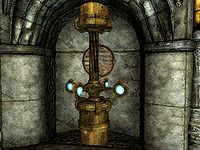
Kinetic Resonator
-
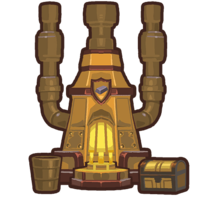
Dwemer Furnace (Castles)
.jpg)


References[edit]
- ^ a b Dwarves, v2 — Calcelmo, Scholar of Markarth
- ^ a b c d Dwemer Inquiries Vol I — Thelwe Ghelein, Scholar
- ^ a b c d Dwarves, v1 — Calcelmo, Scholar of Markarth
- ^ 36 Lessons of Vivec, Sermon 5 — Vivec
- ^ a b c d e Pocket Guide to the Empire, 1st Edition: Hammerfell — Imperial Geographical Society, 2E 864
- ^ Ales Julalanie's dialogue in Morrowind
- ^ a b c d e f g Pocket Guide to the Empire, 3rd Edition: The Temple: Morrowind — Imperial Geographical Society, 3E 432
- ^ Antecedents of Dwemer Law
- ^ a b Pocket Guide to the Empire, 3rd Edition: The Blessed Isle: Alinor and the Summersets — Imperial Geographical Society, 3E 432
- ^ a b The War of the First Council — Agrippa Fundilius
- ^ Dwemer History and Culture — Hasphat Antabolis
- ^ The Ransom of Zarek — Marobar Sul
- ^ Karliah's dialogue in Skyrim
- ^ a b Dwarves, v3 — Calcelmo, Scholar of Markarth
- ^ a b c d e Baladas Demnevanni's dialogue in Morrowind
- ^ Before the Ages of Man — Aicantar of Shimerene
- ^ 36 Lessons of Vivec, Sermon 9 — Vivec
- ^ Pocket Guide to the Empire, 1st Edition: Morrowind — Imperial Geographical Society, 2E 864
- ^ Pocket Guide to the Empire, 3rd Edition: The Ra Gada: Hammerfell — Imperial Geographical Society, 3E 432
- ^ a b Notes For Redguard History — Destri Melarg
- ^ a b Arkngthamz-Phng — Neramo
- ^ a b Dwemer Inquiries Vol III — Thelwe Ghelein, Scholar
- ^ a b The Aetherium Wars — Taron Dreth
- ^ Frostbitten Journal
- ^ a b c In Pursuit of Mhuvnak
- ^ a b The Falmer: A Study — Ursa Uthrax
- ^ a b c Yagrum Bagarn's dialogue in Morrowind
- ^ a b The Battle of Red Mountain — Vivec
- ^ Kagrenac's Tools — Gilvas Barelo
- ^ Vala Catraso's dialogue in Morrowind
- ^ Vivec's dialogue in Morrowind
- ^ Nerevar at Red Mountain — the Tribunal Temple
- ^ Progress of Truth — Dissident Priests
- ^ a b Where Were You ... Dragon Broke — Various
- ^ 36 Lessons of Vivec, Sermon 36 — Vivec
- ^ Five Songs of King Wulfharth
- ^ Azura and the Box — Marobar Sul
- ^ The Dowry — Marobar Sul
- ^ a b Senilius' Report — Senilias Cadiusus
- ^ Aicantar's Lab Journal — Aicantar
- ^ Events of Skyrim
- ^ Dwarven Visor Miter hat description in ESO
- ^ Neramo's dialogue in ESO: Greymoor
- ^ a b Chimarvamidium — Marobar Sul
- ^ The Doors of Oblivion — Seif-ij Hidja
- ^ Dwarven Master Miter hat description in ESO
- ^ Dwarven Spiked Miter hat description in ESO
- ^ Dwarven Writings
- ^ Chronicles of Nchuleft — An Anonymous Altmer
- ^ Dwemer Inquiries Vol II — Thelwe Ghelein, Scholar
- ^ Ruins of Kemel-Ze — Rolard Nordssen
- ^ a b Hasphat Antabolis's dialogue in Morrowind
- ^ Song of the Alchemists — Marobar Sul
- ^ Nchunak's Fire and Faith — Nchunak
- ^ Fang Lair in Arena
- ^ Deep Elf Executioner's Hood's description in ESO
- ^ a b Generic dialogue regarding Dwemer ruins in Morrowind
- ^ Generic dialogue regarding Dwener Artifacts in Morrowind
- ^ Artisa Arelas's dialogue in Morrowind
- ^ Landal Gevont's dialogue in ESO: Wrathstone
- ^ Appearance of Dwarven Armored Mudcrab in Skyrim
- ^ Appearance of Dwarven War Dog pet in ESO
- ^ Falion's dialogue in Skyrim
Note: The following references are considered to be unofficial sources. They are included to round off this article and may not be authoritative or conclusive.
- ^ Gary Noonan explained the Dwemer and Dunmer's shared origins
- ^ According to Michael Kirkbride during the Redguard Forum Madness, the Dwemer were also considered a tribe during the time of the nation of Veloth
- ^ a b Conceptulization for "Notes For Redguard History"
External Links[edit]
|
|||||||||||||||||||||||||||||||||||||||||
|
||||||||||||||||||||||||||
![[Content is available under Attribution-ShareAlike]](http://en.uesp.net/w/images/4/4d/Somerights.png)
