Lore:House Hlaalu
| To meet our site's higher standard of quality, this article or section may require cleanup. The user who placed this here had the following concern: Many sections need to be rewritten to not be direct copies or almost direct copies of sourced material. To leave a message about the cleanup for this article, please add it to this article's talk page. |

- In the great wind of progress, tradition cannot stand. Grasp fortune by the forelocks. When you see your chances, seize them. When you see a chance to turn a profit, take it. But do not follow money blindly. There is value in reputation, more than many young Hlaalu realize. This value must be carefully balanced against the more tangible coins in any deal. Theft and murder are bad for business. You can steal from someone, but will he trade with you after that? You can't bargain with a dead man. — Grasping Fortune
House Hlaalu (also called Clan Hlaalu,[1] the Yellow Party of Hlaalu[2] or "Yellow Hats",[3] and formerly Great House Hlaalu) was one of the five traditional Great Houses of the settled Dunmer.[4] It governed the Hlaalu District of western-central Morrowind from its ancient capital of Narsis,[1] ruled by a leader known as the High Hlaalu.[UOL 1] In the Second Era, House Hlaalu's presence on the island of Vvardenfell was limited to the port town of Seyda Neen.[5] By the late Third Era the house had expanded exponentially, with its council seat located in the ex-Redoran city of Balmora, and other Hlaalu-run towns including Suran (also a former Redoran possession), Hla Oad and Gnaar Mok. On the mainland, the formerly Dres cities of Ebonheart and Kragenmoor were obtained by Hlaalu.[UOL 2][UOL 3] Early in the Fourth Era, soon after the Empire released Morrowind, anti-Imperial sentiment and House Hlaalu's association with the Empire led to the stripping of its rank as a Great House, and House Hlaalu was removed from the Grand Council of Morrowind.[6] Their position on the council was filled by House Sadras.[7]
House Hlaalu could be characterized as adaptable and opportunistic, and any morals they might have had came second to business. The House was largely concerned with business and diplomacy, seeking to strengthen ties with at times unconventional allies such as the Empire, and although profit was often a primary objective, traditional Hlaalu practice recognized the value of a good reputation over money.[8] This was their great strength - they were fast talkers and intelligent traders - and their great liability; most Hlaalu were bribable, either with gold or with other favors, with their leaders as no exception. House Hlaalu retainers were also masters of thievery, sneaking, lock-picking, blackmailing and backstabbing, both literal and metaphorical.[9] While some councilors were honest and fair, others were more under-handed and corrupt. However, House Hlaalu's most distinguishing characteristic was its willingness to live in harmony with the other races, setting it apart from the other, occasionally xenophobic, Dunmer Great Houses.[10]
House Hlaalu maintained oftentimes tumultuous relationships with the other factions of Morrowind, prompting their eventual fall from grace. Though not as favored as House Indoril or House Redoran, the Tribunal Temple retained an overall positive relationship with House Hlaalu.[11] They had less friendly relationships with the rest of the Great Houses, with animosity - and more rarely, outright hostility - existing between themselves and the Indoril,[12] Dres,[13] Telvanni, and Redoran[11] throughout history; though they were formally allied with the latter on at least one occasion.[14] Like the rest of the Great Houses, Hlaalu relations with the Ashlander tribes were strained, and loathing existed for vampires and Sixth House cultists.[11] Of particular note was their relationship with House Indoril, with the longstanding animosity between the Great Houses being particularly noted by Imperial observers.[1] In the Third Era, the Hlaalu retained a positive relationship with the Camonna Tong crime syndicate, and most of the Imperial guilds; including the Fighters Guild, Mages Guild, Imperial Cult, and Imperial Legion. They were less approving of the Thieves Guild.[11]
House Hlaalu adopted the merchant's scale as their heraldry, referencing the source of their power and their pre-eminence in mercantile affairs.[15][16] They likewise adopted the color yellow as a designation.[3][10][17] Their emblem was commonly referred to as the "Golden Scales", and was frequently present on various items associated with the house.[18] Saint Veloth the Pilgrim was the patron saint of House Hlaalu.[19]
History[edit]
First Era[edit]
- Stand proud, kin of Hlaalu! You belong to one of the original Great Houses of the civilized Dunmer. From our capital in the city of Narsis, our influence extends throughout the central region of Morrowind. Some call us opportunistic like it's a curse. But as Grandmaster Hesleth always implored, "The Dunmer who ignores opportunity deserves every failure that comes his way." — Understanding House Hlaalu
—Vivec
House Hlaalu was founded in ancient times, predating the rise of the Tribunal Temple and the transformation of the Chimer into the Dunmer. Indeed, their capital of Narsis was one of the first settlements built by the followers of Veloth in the Merethic Era.[20] The House has existed since the time of the First Council.[21][16] By the 121st year of the Golden Peace, their influence extended throughout the central region of Morrowind.[9]
Prior to the War of the First Council, thirty of the most influential and revered Chimer Clans worked together to build the fabled Library of Andule, a grand repository containing the genealogical records related to the earliest Velothi settlers and other assorted knowledge about the earliest history of the Great Houses.[22] Seven of the thirty Revered Families hailed from House Hlaalu; the Arano, Arenim, Nerano, Norvayn, Tharys, Thelas, and Uveran Clans.[23] The locations of the tombs were presumed lost in the aftermath of the War of the First Council, along with the Library of Andule and the records contained within.[22] The seven tombs were rediscovered in 2E 582, alongside the other twenty-three families and the Library of Andule itself.[24]


According to Agrippa Fundilius, warriors of House Hlaalu fought and died at the Battle of Red Mountain under the leadership of Hortator Indoril Nerevar during the War of the First Council in 1E 700.[21] During the decades in the aftermath of the war, at least one Hlaalu - Counselor Hlaalu-Nothoc - had a role in discussing the nascent Tribunal Temple's plans to reorganize the House lands of Morrowind.[25] From the time of the House's founding, Hlaalu developed a focus towards the mercantile and diplomatic disciplines. With the motto of "To trade fairly and freely is to honor the Three,"[19] These combined cultural practices led to a proclivity towards bribery and corruption within the House. As noted by the House Hlaalu Grand Historian Hlaandu Hlaalu, "for every honest and fair councilor Hlaalu produces, there might be as many as four or five that are underhanded and corrupt". However, the historian also maintained this was not overly concerning to House Hlaalu, as pragmatism would avoid any unduly depths to this behavior.[9]
As House Hlaalu evolved, the standard members were expected to follow suit. Members were expected to be fast and agile, and able to keep up with business and with the times. Being able to speak quickly and convincingly, as well as ability to trade with the best of merchants and make a profit were likewise expected. Learning to protect one's own property by securing it with hidden chests, locks, and even traps was also needed. When confrontation was unavoidable, Hlaalu warriors were taught to fight quickly in comfortable, light armors with short blades, or from a distance with a marksman's weapons.[8]
Great House Hlaalu's role during the eighty-year Four-Score War against the Second Empire is unknown, but the aftermath of the conflict would prove a lucrative time for the House.[26][27]
Second Era[edit]
In the early years of the Second Era, during the period of history directly after the end of the Four-Score War, House Hlaalu was led by Delmene Hlaalu. During his leadership the House amassed great wealth and prestige, exploiting the state of the northeastern Tamriel after the Four-Score War. This period was known as Hlaalu's age of gilded glory.[26][27]

In 2E 559, a dispute over a House Hlaalu trading post in contested territory erupted into a rare armed conflict known as the War of Two Houses. The so-called "war" consisted of only one battle, fought by House Dres mercenaries and House Hlaalu guards at the trading post. Despite the Hlaalu being outnumbered five-to-one, the conflict ended with a decisive House Hlaalu victory when the leader of the Hlaalu guards, Purilla Falen, defended a portal that allowed a full cohort of Hlaalu battle-merchants to swarm the Dres mercenaries.[28]
—Hlaalu Letter of Complaint
In 2E 572, an Akaviri army of Kamal under the leadership of Ada'Soom Dir-Kamal invaded Morrowind from Skyrim through Fort Virak. After a pitched at Vivec's Antlers in Stonefalls, the invaders were defeated with the assistance of Nords from Eastern Skyrim and Argonians from Shadowfen and Thornmarsh.[29] In recognition of their mutural cooperation, the three groups signed an alliance in the city of Ebonheart that became known as the Ebonheart Pact.[30] Four of the Great Houses of Morrowind enlisted in the alliance, including House Hlaalu.[31][3][UOL 4] After the eruption of the War of the Three Banners in 2E 580, House Hlaalu's warriors would be among those that fought for control of Cyrodiil and the White-Gold Tower.[31][3][UOL 4]
House Hlaalu was known to support the Ebonheart Pact,[UOL 4] especially when it came to Pact unity - though this was said to be because the Hlaalu Grandmaster was smart enough to exploit the opportunities offered by the alliance.[3] House Hlaalu also honored the Pact's request to end the practice of slavery by its member parties, and actively enforced this by persecuting slavery in its terretories.[31][32][33] Despite the outward enthusiasm for the alliance that many Hlaalu displayed, the Pact and Three Banner's War had an adverse effect on House Hlaalu's prosperity. According to the House Hlaalu Deputy Trade Viceroy Tirnur Nalyn, Morrowind's economy was imperiled by the Pact and the War. Hlaalu trade ministers went to great lengths to solidify their holdings outside Morrowind. While the enemy alliances seized most of their extraterritorial property, they retained sizable assets in Imperial bourses and foreign business concerns. Extracting this wealth proved difficult, and took time, gold, and connections.[34]
Some years prior to 2E 582, House Hlaalu and House Redoran entered into a formal alliance.[14] While House Hlaalu deferred to House Redoran in matters of defense, House Redoran deferred to House Hlaalu in matters of commerce and diplomacy.[34] A product of this partnership was the construction of many Redoran holdings on the frontier island of Vvardenfell by the Hlaalu Construction Syndic, including the cities of Balmora and Suran. However, the Syndic violated the terms of the construction contract when they ignored the instructions for the settlements to be built in House Redoran's architectural style and instead built them in the Hlaalu style. Hlaalu furthermore used the opportunity to establish business relations with all sources of raw materials and provisions throughout Vvardenfell, and acquire a near-monopoly in these areas.[35] These events, coupled with the belief that House Hlaalu coveted Balmora and Suran for themselves, led to relations between House Hlaalu and House Redoran becoming strained in spite of their alliance, with House Redoran officially marking House Hlaalu as a group operating against their best interests.[14] Around the same time, the Hlaalu formed a trade deal with the Gold Coast Trading Company, and contracting them to build the port of Seyda Neen.[UOL 5] Seyda Neen was then used to welcome visitors to Vvardenfell and provide access to the rest of the island.[36] House Hlaalu also made contributions towards the construction of Vivec City by donating gold from its vast treasury.[UOL 6]

By 2E 582, House Hlaalu was prominent in the Deshaan region of southern Morrowind, but remained weak in the rest of Morrowind.[3] That same year, the House faced trouble in their capital region around Narsis. The Maulborn Cult, posing as a philanthropic organization, released the Llodos Plague in the Hlaalu-ruled Redolent Loam region of Deshaan.[37] The disease spread to Narsis, and led to the lockdown of the city and the evacuation of much of the population. Unbeknownst to Councilor Ralden, the resident Hlaalu official at the time, his advisor Giron Sadri was a member of the Maulborn Cult and facilitating the spread of the plague in nearby Lake Hlaalu, and the kidnapping of Narsis citizens. The arrival of a stranger and pair of Morag Tong agents helped expose Giron and save Narsis, though the fate of Councilor Ralden and the abducted citizens in the aftermath remained unknown.[38] The Maulborn perpetrators were pursued east into the Obsidian Gorge, where Hlaalu enforcers and their allies put an end to the Llodos Plague production and the alchemist behind the disease, Merdyndril.[39] Elsewhere in Deshaan, Hlaalu guardsmen rooted out a hostile clan of Orcs named the Oathbound in an area of the Valus Mountains named Malak's Maw,[40] and attempted to establish trade relations with the Mabrigash Tribe of ashlanders in the Vale of the Ghost Snake.[41]

Later in 2E 582, House Hlaalu faced further troubles within their Vvardenfell holdings. In the port of Seyda Neen, illegal slavers under Captain Svadstar set up a base of operations on the nearby abandoned Redoran outpost on Firemoth Island with the assistance of the corrupt Governor Omellian. With the assistance of a Morag Tong agent and a taveler, Deputy Governor Deminah Salvi and the local Hlaalu guard shut down the operation - but it was unknown if the disgraced former Governor Omellian was brought to justice.[42] In Balmora, the brothers Malur and Benar Rethan quarreled over the Vassir-Didanat Mine and a scheme to produce false ebony via the murder of innocents. The scheme was ultimately exposed, and the mine's ownership passed to Hlaalu Councilor Rayveth, though it is unknown if the Councilor continued the Rethan brother's grisly scam.[43] In the eastern regions of the island, Mistress Dratha was poisoned by a Telvanni wizard named Savarak who bargained with House Hlaalu to depose the Magister. House Hlaalu coveted Dratha's territory, and Savarak desired Dratha's position as Magister. They infected Dratha's mushroom tower with infectious spores in an attempt to kill her, but their plot was stopped by Dratha's Mouth with the assistance of a traveler.[44]
In 2E 864, the Imperial Geographical Society reported House Hlaalu as being "the smallest and weakest of the five clans", noting that the Hlaalu nevertheless maintained limited commerce with the Empire, trading Imperial broadcloth and Cyrodilic brandy for the elegant crafts produced by the crafters of Morrowind.[1]
In the twilight years of the Second Era, Tiber Septim's legions turned their eyes towards Morrowind. Facing the threat of invasion, the Great Houses were divided in how to handle the situation. Uniquely, Hlaalu boldly proposed accommodating the Imperials rather than fighting them. They were alone in this however, with House Indoril, Dres and Redoran swearing to resist the western invaders to the death, and House Telvanni recusing themselves from the conflict altogether. House Redoran soon found itself manning the western borders of Morrowind alone, with House Indoril and House Dres preferring to retreat inwards to wage a guerrilla war. When Vivec signed the Armistice, House Hlaalu was the first to welcome the agreement. After the Armistice was signed, the ruling Lord High Councilor of Morrowind, a member of House Indoril who refused to accept the treaty, was assassinated, and replaced by a Hlaalu noble, toppling Indoril from its ancient pedestal as the leading Great House and propelling House Hlaalu to the top in its place. Furthermore, the newly-established Imperial role of the figurehead Sovereign of Morrowind was also filled by a Hlaalu; beginning with Queen Barenziah.[12] For the next era, House Hlaalu would reign over the Grand Council of Morrowind at the Empire's behest.
Third Era[edit]
- As a result of its close relationship with the Imperial administration, House Hlaalu has emerged as politically and economically dominant among the Great Houses of Vvardenfell and Morrowind. Hlaalu welcomes Imperial culture and law, Imperial Legions and bureaucracy, and Imperial freedom of trade and religion. Hlaalu still honors the old Dunmer ways -- the ancestors, the Temple, and the noble houses -- but has readily adapted to the rapid pace of change and progress in the Imperial provinces. — Great Houses of Morrowind


House Hlaalu entered the Third Era as the dominant local power in the Imperial province of Morrowind. Owing to its close relationship with the new administration, they became politically and economically dominant among the Great Houses. It is said that much of the Hlaalu's success as a Great House in the late Third Era is attributed to the earnings of one, Hlaalu Pasoroth, the great-grandfather of Hlaalu Helseth.[45] Unlike the other Houses, the Hlaalu generally adapted rapidly to cultural changes - even welcoming them on some occasions.[10] Alongside their meteoric rise in power, the House also saw significant expansions in territory both on the mainland and in Vvardenfell. In mainland Morrowind, House Hlaalu's territory expanded past Redolent Loam and grew to incorporate the cities of Ebonheart and Kragenmoor, who'd since lost their previous House Dres oversight.[UOL 2][UOL 3] After Vvardenfell was opened for settlement in 3E 414, House Hlaalu's longstanding plans to seize Balmora and Suran from House Redoran for themselves came to fruition, and the Redoran were driven out of their former settlements. The smaller villages of Gnaar Mok, Hla Oad were built, and one of the cantons of the completed Vivec City was dedicated to Hlaalu retainers and kin.[46] As a whole, Hlaalu managed to grab the lion's share of the best lands in the fertile Ascadian Isles, and also got awarded the charter to the rich ebony mines in Caldera. Hlaalu's immediate move to colonize Vvardenfell granted them greater holdings than the more hesitant Redoran and Telvanni.[UOL 7]
As of the late Third Era, Queen Barenziah had abdicated in favor of her Uncle, King Hlaalu Athyn Llethan and House Hlaalu was ruled by Grandmaster Vedam Dren, also the Duke of Vvardenfell.[17] The Duke's brother, Orvas Dres was the Kingpin of the Camonna Tong crime syndicate, resulting in the affairs of House Hlaalu and the Camonna Tong becoming inexorably intertwined.[47] Two House Councilors - Velanda Omani and Nevena Ules - became direct puppets of Orvas Dren and his way to exercise his will on the Hlaalu Council.[48] Duke Dren's daughter, meanwhile, founded the Twin Lamps abolitionist movement.[49] While Duke Vedam disapproved of his brother's activities he was largely powerless or unmotivated to stop them.[50] The High Hlaalu at this time was among the most powerful men in the province, and it had been many years since anyone dared set the Morag Tong onto Hlaalu kin.[UOL 1] Slavery was considered uncommon in Hlaalu districts by this time,[51] but Hlaalu-owned slave plantations such as the Arvel and Dren plantations could still be found in Hlaalu territories.[52]
In 3E 426, the Hlaalu council reported a reduction in the incidence of theft and violent crime in the Hlaalu House Districts, thanks to the vigilance of the Legions and stern sentences by the magistrates. The council also expressed concerns over high tax rates and the injurious effect of high tariffs on trade, and reported that a minor tax revolt in Balmora was suppressed without undue harm to life and property. Concerns were also raised regarding the disturbances of the public peace resulting from the increasingly aggressive competition between the Thieves Guild and the Camonna Tong for control of the black markets.[17]


House Hlaalu found itself embroiled in numerous conflicts in 3E 427. House Redoran struggled to compete with House Hlaalu's dominance of the ebony trade in Vvardenfell,[53] with the most obvious conflict centered on the town of Caldera, which was founded by the Imperial Caldera Mining Company with the support of House Hlaalu. House Redoran actively worked to find evidence of corruption in Caldera in an effort to shut the mines down[54] There was also bickering with House Telvanni concerning the seizing of large tracts of land,[55] the founding of certain new settlements in the Ashlands such as Tel Uvirith,[56] and the occupation of old Velothi Towers, such as Odirniran.[57] Hlaalu agents also attempted to prevent the construction of Indarys Manor by House Redoran,[58] while both Redoran and Telvanni agents attempted to prevent the Hlaalu from building Rethan Manor on the Odai Plateau.[59] Two Hlaalu noblemen, Meril Hlaano and Ondres Nerano, were confronted by Redoran agents for slander.[60]
House Hlaalu played a major role during the fulfillment of the Nerevarine prophecies and the series of events that saw the end of the Blight, Dagoth Ur, and the Tribunal. The Hlaalu Council formally recognized the Nerevarine as Hortator, after Orvas Dren and his puppets on the council were either persuaded or eliminated. It was rumored that Vedam Dren also stepped down as Grandmaster in favor of a rising star in House Hlaalu that year, making him the only one of the three Great House leaders on the island to survive the Nerevarine's rise to power.[61][62] Later that year, King Hlaalu Athyn Llethan passed away under mysterious circumstances and was succeeded by his grand-nephew, Hlaalu Helseth.[63] The young Hlaalu King's reign was initially challenged by various groups including the Tribunal Temple, but none were successful.[64]
By 3E 432, House Hlaalu was said to still be on the rise as they embraced new traditions while welcoming the return of the old.[65] Count Andel Indarys of Cheydinhal was said to have gained his position as the only non-Imperial Count of Cyrodiil, allegedly due to his connections with House Hlaalu and its connections with the Empire.[66]
During 3E 433, rumors in Cyrodiil suggested King Helseth had made an unprecedented alliance between House Hlaalu and House Dres, and abolished slavery. The alliance went on to "pick apart the carcass of ruined Indoril."[67] Later that year, the Oblivion Crisis erupted across all of Tamriel and set events in motion that would see the downfall of the Great House. The Empire pulled a vast majority of the Legions out of Morrowind to deal with the gates opening in their homeland of Cyrodiil, taking most of Hlaalu's political power with them. The Dunmer had no standing army at the time, and were left nearly defenseless as the armies of Daedra swept across the province. While House Redoran succeeded in creating an army, and House Telvanni was able to close some of the Oblivion Gates, House Hlaalu was left powerless without the backing of the Empire.[6] The events that transpired in the Imperial City and Akatosh's intervention ended the Crisis and created increased interest in the Imperial Cult among many Hlaalu citizens, but the damage was done.[UOL 3]
Fourth Era[edit]
—Adril Arano

The events of the Red Year, 4E 5, brought further destruction to Morrowind, with all of the settlements on Vvardenfell being heavily damaged. Shortly after the eruption of Red Mountain, Morrowind came under siege from the Argonians of Black Marsh, and was again saved by the army led by House Redoran. House Hlaalu, due to their close ties with the Imperial administration, became the scapegoat for all of the Dunmer people's suffering. As a result, Hlaalu was unceremoniously stripped of its Great House status and dismissed from the Morrowind Grand Council.[6] House Redoran became the eminent power in Morrowind, taking the position that Hlaalu had held throughout the Third Era. The Hlaalu believe that Redoran were instrumental in the reorganization of the council, and have held a grudge ever since.[68] Indeed, Hlaalu refugees were still found living in some cities of eastern Skyrim two centuries later, such as Windhelm and Riften.[69] House Hlaalu's seat on the Grand Council has been filled by the new Great House Sadras.[6][7]
In 4E 95, the Redoran Guard uncovered a Hlaalu plot by Vilur Ulen to assassinate the Redoran Councilor Lleril Morvayn of Raven Rock. The town, and the island of Solstheim, were given to the Dunmer by the High King of Skyrim in 4E 16 as a refuge following the events of the Red Year and were now administered by House Redoran.[70] The coup was an attempt by Hlaalu to claim Solstheim from House Redoran, and to send a message to the Council that their new leaders were not as mighty as they purported to be. However, the conspirators were executed and the coup was quelled.[68] A second attempt in 4E 201 by Vilur's son Vendil was foiled by the Last Dragonborn, resulting in Vendil being executed like his father before him.[71]
The remaining extent or holdings of House Hlaalu, if any, are unknown.
Culture[edit]
Architecture[edit]

Hlaalu public buildings -- tradehouses and craft guilds, manors and council halls -- are designed as simple multi-storied buildings roughly rectangular in plan, featuring arched entranceways and modest decorated exteriors. More modest one-story private dwellings follow the same plan, except with less decoration. Hlaalu plantation estates resemble Temple compounds, with walled precincts enclosing outbuildings for craftsmen and servants, dominated by a grand manor residence in place of a Temple shrine.
Equipment[edit]
In the Second Era, warriors of House Hlaalu maintained strict standards for the arms and armor of our House guards and marines. Equipment had to meet a satisfactory degree of quality and appearance, and exemplify that dependability was expected from Hlaalu kin by their trading partners. Where possible, they adorned their items with the stylized merchant-scale sigil that symbolized the source of their power.

Hlaalu belts were made of double-tanned guar hide, strong and thick, to support tassets, weapons, and money pouches. The buckle in front could display a Hlaalu House symbol or a personal family crest. Their boots were rather heavy, and though narrow below, they widened as they rose up the shins toward the knee. Toes were steel-shod except in the lightest armors; shin plating extended around the back of the leg to protect against hamstringing. Cuirasses were constructed of overlapping plates of traditional worked bonemold, or of metal plates cast to resemble bonemold. The House scales-symbol was prominently displayed on the chest and abdomen. Hlaalu gauntlets were of flexible leather over the fingers and hands, with the forearms and back of the hands protected by flaring plates of bonemold (or metal cast to resemble it). The leather at the fingertips had to be supple enough to not to impair the rapid counting of coins. Helms (and in light armor, hoods) covered the entire head, with a full face visor for protection against environmental dangers. They were of bonemold, or metal crafted to resemble it, bulbous in shape, and elongated toward the back of the skull to protect the traditional cranial coin stash. Cuisses and jambes were constructed of flaring bonemold (or bonemoldesque) plates, protecting the legs at front, sides, and rear. Knee poleyns may have displayed the House scale symbol or a personal family crest. Finally, pauldrons were constructed of overlapping triangular bonemold or bonemoldesque plates, flaring at the top to help protect the side of the neck. Their designs could be abstract, or inscribed with House symbols.
Hlaalu swords were long and straight and double-edged. They sported a distinctive curve-hooked tip design they shared with Hlaalu daggers. The quillions resembled broad wings that protected the hands of the wielders. The daggers were primarily parrying weapons, double-edged, broad and straight, with the same distinctive curve-hooked tip design of the swords. The wide crossguards resembled the wings of cliff striders, but were edged and pointed for backhand attacks. Axes had a single heavy curved blade, backed on the opposite side of the haft by a narrow spike for grabbing opponents or punching through their armor. For parrying purposes, most of the haft was sheathed in a cylinder of metal, and there was a heavy, pointed ferrule at the base. Maces were tipped with a trio of curved flanges, heavy for crushing and edged for slashing. As with the axes, mace hafts were sheathed in metal for most of their length to enable parrying, and footed with heavy, pointed ferrules. House bows were made of imported ash or yew wood, which was superior for bows to the native funguswoods of Morrowind. Quivers were guar leather, adorned with the House symbol, a long double-scales version. Hlaalu mage's spell staves sported a finial in the shape of the House double-scales symbol, displaying the wielder's affiliation with Hlaalu. The foot was sheathed in metal, with a heavy ferrule, enabling it to serve as defensive weapon at need. The large, kite-shaped Hlaalu shields were traditionally crafted of bonemold, but were just as often made of metal plated over funguswood. The Hlaalu scale symbol was prominently displayed on the front.
Ranks[edit]

In 3E 427, House Hlaalu's internal ranks were almost identical in structure to those of House Redoran, with the exception of the leader's title.[72] The naming convention for each rank seemed inspired by kin or family themes. It is unknown if the ranking structure has remained unchanged throughout the Great House's storied existence. The House's Third Era ranks are as follows:
- Grandmaster[72]
- Councilman[72]
- House Father[72]
- House Brother[72]
- House Cousin[72]
- Kinsman[72]
- Lawman[72]
- Oathman[72]
- Retainer[72]
- Hireling[72]
Gallery[edit]
-
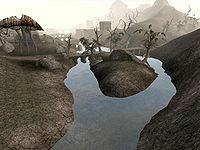
Balmora, the district seat of House Hlaalu on Vvardenfell, as seen in Morrowind
-
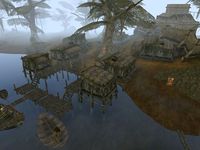
The Hlaalu village of Gnaar Mok, as seen in Morrowind
-
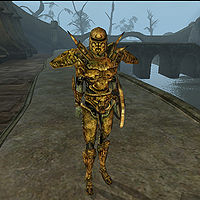
A Hlaalu Guard, as seen in Morrowind
-
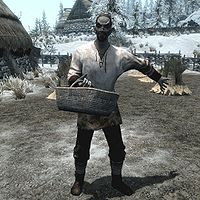
A descendant of former Great House Hlaalu, as seen in Skyrim
-
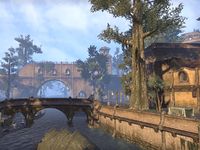
The Hlaalu-built but Redoran-owned city of Balmora. as seen in ESO
-
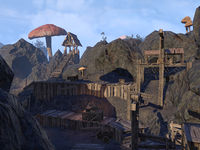
A Hlaalu-owned ebony mine, as seen in ESO
-
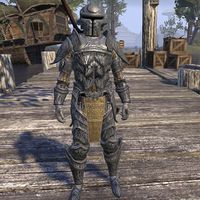
A Hlaalu Guard, as seen in ESO
-
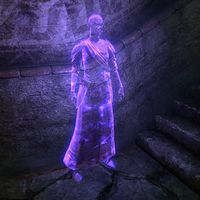
An ancestor spirit of House Hlaalu, as seen in ESO
-
House Hlaalu themed card back
-
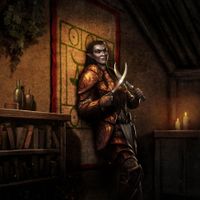
Almse Arenim, an Oathman of House Hlaalu, as seen in Legends
-
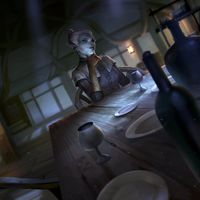
Nileno Dorvayn, a Kinsman of House Hlaalu as seen in Legends
-
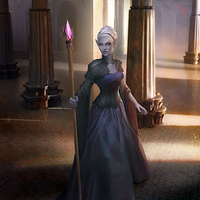
Queen Barenziah of House Hlaalu, as seen in Legends
-
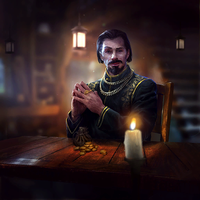
Crassius Curio, a Councilor of House Hlaalu, as seen in Legends
-
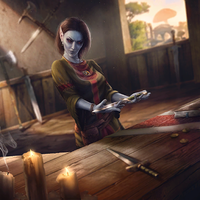
Ravoso Aryon, a Hlaalu merchant, as seen in Legends
-
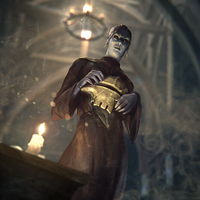
A Hlaalu scheme, as seen in Legends
-
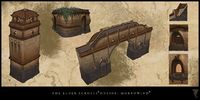
Hlaalu architecture
-
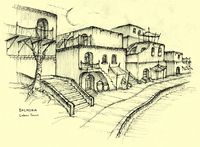
Hlaalu architecture
-
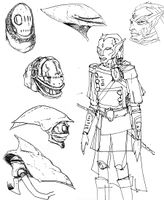
Concept art of Hlaalu attire


Notes[edit]
- Several settlements appeared in a pre-release concept map of Morrowind under the control of House Hlaalu. These Hlaalu-ruled settlements included Kragenmoor, Ebonheart, Narsis Hlaalu, Othrenis, Andrethis, Heimlyn Keep, Old Keep, Stonefalls, and Riverbridge.[UOL 2]
- Hlaalu councilors host large events, such as the House Hlaalu Masquerade Ball.[73]
- It is a tradition for Hlaalu nobles to embed glass gems from their ancient flagships in their foreheads, in memory of the glass of the wrecked ships used in the construction of Seyda Neen's Grand Pharos Lighthouse.[UOL 8]
- The Saraathu Tong was a faction that swore allegiance to House Hlaalu and used their expertise with portal magic to supply the House with trade goods from across the realms.[74]
- During the initial years of the Imperial occupation by Tiber Septim, the Empire reinstated the ancient title of "king," derived from early Chimer traditions, signifying a "high chief of the clans" akin to the High Elven High King. This replaced the role of the "military governor" during the initial years of the occupation. The king in 3E 427, Hlaalu Athyn Llethan, descended from Hlaalu Brevur the Betrayer, and along with his "court" was generally held in disdain by the native population.[UOL 1][UOL 7][UOL 9]
See Also[edit]
- For game-specific information, see the Morrowind and Elder Scrolls Online articles.
Books[edit]
- Crafting Motif 51: Hlaalu Style by Mastercraft Mediator Rolis Hlaalu — A guide to crafting armor and weapons in the Hlaalu style
- The Great Houses and Their Uses by Tel Verano — Appraisals of the Great Houses of Morrowind
- Great Houses of Morrowind — A description of the five great houses of Morrowind
- Grasping Fortune by Serjo Hlaalu Dram Bero — Evangelical and documentative work of Great House Hlaalu
- Guide to Balmora — An overview of Balmora's people and notable places
- House Hlaalu Philosophy of Trade — The philosophy of House Hlaalu
- Mottos of the Dunmeri Great Houses by Vilyn Girith — A Dunmer rebukes his son for lacking common knowledge
- Understanding House Hlaalu by Hlaandu Hlaalu, Grand Historian for the House — A book about the history and values of House Hlaalu
- War of Two Houses by Drelisa Hlaalu, House Historian — A Hlaalu account of an armed conflict with House Dres in 2E 559
- Yellow Book of 3E 426 — Gives a list of Hlaalu councilors and house affairs
References[edit]
- ^ a b c d Pocket Guide to the Empire, 1st Edition: Morrowind — Imperial Geographical Society, 2E 864
- ^ Various Great Houses dialogue topic in Morrowind
- ^ a b c d e f The Great Houses and Their Uses — Tel Verano
- ^ Understanding House Hlaalu — Hlaandu Hlaalu, Grand Historian for the House
- ^ Hlaalu-controlled settlements in Elder Scrolls Online: Morrowind
- ^ a b c d Adril Arano's dialogue in Dragonborn.
- ^ a b Lleril Morvayn's dialogue in Dragonborn.
- ^ a b Grasping Fortune — Serjo Hlaalu Dram Bero
- ^ a b c Understanding House Hlaalu — Hlaandu Hlaalu, Grand Historian for the House
- ^ a b c Great Houses of Morrowind
- ^ a b c d House Hlaalu's Friends and Foes in Morrowind
- ^ a b On Morrowind — Erramanwe of Sunhold
- ^ War of Two Houses — Drelisa Hlaalu, House Historian
- ^ a b c House Redoran Advisory
- ^ Crafting Motif 51: Hlaalu Style — Mastercraft Mediator Rolis Hlaalu
- ^ a b Poison Song II — Bristin Xel
- ^ a b c Yellow Book of 3E 426
- ^ Hlaalu "Golden Scales" Paperweight item description in ESO
- ^ a b Mottos of the Dunmeri Great Houses — Vilyn Girith
- ^ Narsis Ruins loading screen text in ESO
- ^ a b The War of the First Council — Agrippa Fundilius
- ^ a b Librarian Bradyn's dialogue in ESO: Morrowind
- ^ Ancestral Tomb markers in ESO: Morrowind
- ^ Events of The Ancestral Tombs and The Lost Library in ESO: Morrowind
- ^ Poison Song VII — Bristin Xel
- ^ a b High Isle Preview—Exploring Tales of Tribute’s Patrons
- ^ a b Tales of Tribute: Series One — The Founders
- ^ War of Two Houses — Drelisa Hlaalu, House Historian
- ^ The Second Akaviri Invasion — Yngmaer Raven-Quill, Historian Royal of the Bards' College, Solitude
- ^ Unexpected Allies
- ^ a b c Pact Pamphlet: Congratulations!
- ^ Events of Breaking Through the Fog in ESO: Morrowind
- ^ Deminah Salvi's dialogue in ESO: Morrowind
- ^ a b Hlaalu Letter of Complaint — Tirnur Nalyn
- ^ Hlaalu Construction Syndic — Manaran Renim, First Clerk of House Affairs, Vvardenfell
- ^ Introduction to Vvardenfell
- ^ Events of the Quarantine Serk quests in ESO
- ^ Events of the Narsis quests in ESO
- ^ Events of the Obsidian Gorge quests in ESO
- ^ Events of the Malak's Maw quests in ESO
- ^ Events of the Vale of the Ghost Snake quests in ESO
- ^ Events of the Breaking through the Fog quest in ESO: Morrowind
- ^ Events of the Like Blood from a Stone quest in ESO: Morrowind
- ^ Events of Reclaiming Vos in ESO
- ^ Hallgerd's Tale — Tavi Dromio
- ^ Settlements under House Hlaalu control in The Elder Scrolls III:Morrowind
- ^ Generic Dialogue regarding Orvas Dren in Morrowind
- ^ Dram Bero's dialogue in Morrowind
- ^ Ilmeni Dren's role in Morrowind
- ^ Vedam Dren's dialogue in Morrowind
- ^ Brallion's dialogue in Morrowind
- ^ Arvel and Dren Plantations in Morrowind
- ^ Meril Hlaano's dialogue in Morrowind
- ^ Events of Shut the Mines Down in Morrowind
- ^ Generic Dialogue regarding troubles for House Hlaalu in Morrowind
- ^ Events of Kill Reynel Uvirith in Morrowind
- ^ Events of Telvanni at Odirniran in Morrowind
- ^ Events of Kill Banden Indarys (Hlaalu) in Morrowind
- ^ Events of Slay Raynasa Rethan and Kill Raynasa Rethan in Morrowind
- ^ Events of Meril Hlaano's Slanders and Ondres Nerano's Slanders in Morrowind
- ^ Events of Hlaalu Hortator in Morrowind
- ^ Events of Dealing with Orvas Dren in Morrowind
- ^ Gavas Drin dialogue in Tribunal
- ^ Hlaalu Helseth's dialogue in Tribunal
- ^ Pocket Guide to the Empire, 3rd Edition: The Temple: Morrowind — Imperial Geographical Society, 3E 432
- ^ How did a Dark Elf become Count Cheydinhal? King Helseth and Barenziah have considerable influence, and Helseth and Indarys are cronies. Get it? rumor in Oblivion.
- ^ Rumors in Oblivion
- ^ a b History of Raven Rock, Vol. III — Lyrin Telleno
- ^ Belyn Hlaalu and Niluva Hlaalu in Skyrim
- ^ Loading Screen captions from Dragonborn
- ^ Events of Served Cold in Dragonborn
- ^ a b c d e f g h i j k House Hlaalu's faction ranks in Morrowind
- ^ Naryu's dialogue in Smolder Scrolls Online
- ^ Vaveli Indavel's dialogue in ESO: The Deadlands
Note: The following references are considered to be unofficial sources. They are included to round off this article and may not be authoritative or conclusive.
- ^ a b c Skeleton Man's Interview with Denizens of Tamriel
- ^ a b c Concept map of Morrowind, released during the Tenth Anniversary of TES
- ^ a b c Caius Cosades' Letter — Caius Cosades
- ^ a b c Morrowind – Influential Factions of Vvardenfell
- ^ Lawrence Schick's Posts - How would ESO explain the Imperial architecture on Vvardenfell 700 years before TES3?
- ^ Lawrence Schick's Posts - Vivec City and Baar Dau - what came first?
- ^ a b Ken Rolston's Posts
- ^ Michael Kirkbride's Posts
- ^ Douglas Goodall's Posts
![[Content is available under Attribution-ShareAlike]](http://en.uesp.net/w/images/4/4d/Somerights.png)

