Lore:Dunmer

The Dunmer, also known as Dark Elves,[1] or the archaic Moriche,[2][nb 1] are the grey-skinned, typically red-eyed elven peoples of Morrowind. In the Empire, "Dark Elf" is the common usage, but they and their Aldmeri brethren prefer the term "Dunmer".[1] "Dark" is variously interpreted as meaning "dark-skinned", "gloomy", and "ill-favored by fate", with the Dunmer and their national identity embracing these various connotations with enthusiasm.[3]
Their combination of powerful intellects with strong and agile physiques produce superior warriors and sorcerers.[4] On the battlefield, Dunmer are noted for their skill with a balanced integration of the sword, the bow and destruction magic. Dunmer live two to three times as long as humans; with a 200-year-old Dunmer being old[5] and a 300-year-old Dunmer being very, very old.[6] In character, they are generally grim, aloof, and reserved.[1]
Dunmer distrust and are treated distrustfully by other races.[7] They are often called proud, clannish, ruthless, and cruel, from an outsider's point of view, but greatly value loyalty and family.[7] They also apparently have a reputation for quick tempers.[8] Despite their powerful skills and strengths, the Dunmer's vengeful nature, age-old conflicts, betrayals, and ill-reputation prevent them from gaining more influence. Those born in their homeland of Morrowind are reputed to be considerably less friendly than those who grew up in the Imperial tradition.[9]
Dark Elves are especially susceptible to skin diseases, which are collectively referred to as "corprus" (not to be confused with the Divine Disease), being named after the ancient Velothi word for "skin blight".[10]
History[edit]

The history of the Dunmer begins with the Chimer—a race of elves with pale gold skin who followed the prophet Veloth from Summerset Isle to Resdayn (present-day Morrowind) seeking religious freedom.[1][11][12] Their Aldmer predecessors came to Tamriel with deep-rooted traditions of ancestor worship. As Aldmer society grew more stratified, the class divide became a prominent aspect of society and bled into religious beliefs. The ancestor spirits of the upper castes grew in popularity, and in time, they were converted into gods. Where once Auri-El had been an ancestor spirit of the nobility, all the Altmer would eventually claim Auri-El as a common ancestor.[13][14]
Those who would become the Psijic Order were among the mer who vocally disapproved of these societal changes. The Keepers of the Old Ways of Aldmeris believed that all divine forces are driven by ancestor spirits; even the Aedra and Daedra are just the spirits of exceptional mortals who attained power in the afterlife.[15] The Psijics' defiant settling of Artaeum was the first of many departures from what is now the home of the High Elves, and a mass exodus of the lower classes soon occurred.[13] The Chimer (who are also referred to as "the Velothi people", a moniker later upheld by the Ashlanders) were among those who fled.[16]
First Era[edit]

The Dunmer were born from the ashes of the Battle of Red Mountain.[1] The infamous confrontation around 1E 700 led to the death of an ancient and respected war leader known as Lord Indoril Nerevar, the destruction of the Sixth House, the disappearance of the entire Dwemer race then present on Nirn, and the ascension into godhood of four of Nerevar's councilors and closest friends, culminating in a curse from Azura (the Goddess of Dusk and Dawn and the patron of Nerevar) that transformed the Dunmer into their present appearance.[17][18][19][20]
Azura's curse was motivated in response to Nerevar's councilors, the general Vivec, the sorcerer Sotha Sil, and his wife Almalexia, breaking an oath they had sworn to Nerevar and Azura by stealing the divine power of the Heart of Lorkhan for themselves.[18] When this Tribunal of new living gods showed no remorse to Azura, she cursed them and all Chimer, tying the fate of the Dunmer and Tribunal together until the end of time.[18][19] Some Dunmer don't consider the darkening of their skin to be a curse, but rather see their sober complexion as a gift to mark the ascent of the Tribunal.[21]

The House Dunmer came to worship the Tribunal as their new gods, following their teachings and supplanting the Daedric patrons of the Chimer, which were relegated to Anticipations of the new Triunes.[22][23] The nomadic Ashlander Tribes, on the other hand, decried the Tribunal as false gods and continued the Chimer traditions, especially those of Daedra worship.[17][24] As a result, the Ashlanders would subsequently spend over three millennia ostracized from House Dunmer society and driven to the margins of Morrowind.[25][26][27][28]
For thousands of years, the divine Tribunal used their power and leadership to protect the Dunmer from foreign invasion and, later, from Dagoth Ur, their ancient archenemy and the devil incarnate for the Dunmer (for he, too, had stolen divine power).[18]
The Dunmer of Morrowind came into conflict with the Alessian Empire over the Ayleid complex that would one day be the city of Stormhold during Empress Hestra's reign. The conflict occurred during or prior to the eleventh century of the First Era. This 'War for Silyanorn' included the naval Battle of Tear Harbor, wherein the House Indoril fleet was defeated by the Imperial fleet offshore of the House Dres capital city.[29] Though the Imperials claimed the Indoril flagship after the battle, the war's outcome appears to have been in the Dunmer's favor, as Stormhold was under Dunmer rule as late as 2E 572.[30][31][32][33]
Centuries later, the Dunmer butted heads with the Reman Empire. Seeking to conquer the land of the Dark Elves, Reman II initiated an invasion of Morrowind in 1E 2840.[34] For the next eighty years, war raged between the Empire and Morrowind as the former attempted to subdue the latter. Even after Reman II's death at Dunmeri hands, his successors Brazollus Dor and Reman III continued the war.[34] By the final year of the First Era in 1E 2920, both sides were nearing exhaustion. After a disastrous Imperial defeat at Bodrum, and the Dunmer's catastrophic defeat at Ald Marak, both sides entered peace talks.[35] The assassination of Reman III and his heir by the Morag Tong brought the war to an abrupt end. Reman III's successor, Potentate Versidue-Shaie, signed the Cervant Truce with the Dunmer,[36] ending the Imperial invasion with a de facto victory for Morrowind and making it the only nation of Tamriel to never be controlled by the Second Empire.[35][37]
Second Era[edit]

The Dunmer entered the Second Era as the only nation of Tamriel outside of the influence of the Second Empire under the Akaviri Potentate.[37] In contrast with the lengthy Four Score War, the opening centuries of the Second Era were relatively uneventful. In 2E 324, Potentate Versidue-Shaie was assassinated in Senchal by the Morag Tong, whom scrawled 'MORAG TONG' upon the walls of the Potentate's residence in his own blood.[38][39][40] The assassination led to the instantaneous and unanimous outlawing of the Morag Tong in all corners of Tamriel, with the exception of its home province of Morrowind. This notoriety is believed by most scholars to have resulted in the splintering of the Tong and the creation of the Dark Brotherhood.[39] Despite the infamy they gained after Versidue-Shaie's assassination, the Morag Tong struck again in 2E 430 and killed his successor Savirien-Chorak.[41] and what was believed to be all of his heirs on the same night (though one, Proconsul Beloren-Kaie, survived and was later slain by Morag Tong assassin Methas Daram).[42][41] The Potentate's death at the hands of the Tong promptly resulted in the final disintegration and collapse of the Second Empire, and the beginning of the Interregnum.[40][43]
After the coronation of High King Svartr of Western Skyrim in 2E 431, a delegation from Lord Vivec presented the instrument 'Jarlsbane' to the High King. After being declared "grossly untunable and overly complicated" by the court musicians, it sat in Solitude's Blue Palace as a curiosity for many years. It was rediscovered over a century later by Master Bard Endroni Selvilo of House Redoran shortly before 2E 582. Nevertheless, the instrument remained in the city, relocated to the Bards College.[44]

With the collapse of the Second Empire, Dunmeri enslavement of Argonians saw a substantial increase, though it had been occurring since the early First Era,[45][46][47][48] as slavers from House Dres and House Telvanni were freer than ever to exploit their southern neighbor, and entire tribes of Argonians were dragged off in chains.[49][50] Some believe that this mistreatment of the reptilian race led an unnamed Argonian shaman to create the Knahaten Flu, a deadly disease that first appeared in Stormhold—headquarters of the Dunmeri slavers in Black Marsh[32][33][51]—in 2E 560 before spreading across Tamriel and claiming thousands of lives.[52][49][53] Some time after the outbreak of the Knahaten Flu, House Redoran sent a military expedition to the great stone city of Mazzatun in the Shadowfen region of Black Marsh, intending to wipe out the Xit-Xaht tribe, whom they suspected was responsible for the disease.[54] When the Knahaten Flu subsided after 2E 603, Dunmeri slavers of House Dres remained one of the few non-Argonians who saw any reason to trouble themselves with Black Marsh, and continued to raid the north of the swamps.[49]
In 2E 559, a dispute over a House Hlaalu trading post in contested territory erupted into an armed conflict known as the War of Two houses. The so-called "war" consisted of only one battle, fought by House Dres mercenaries and Hlaalu guards at the trading post. Despite the Dres outnumbering the Hlaalu five-to-one, the conflict ended with a decisive House Hlaalu victory when the leader of the Hlaalu guards, Purilla Falen, defended a portal that allowed a full cohort of Hlaalu battle-merchants to swarm the Dres mercenaries.[55] Prior to the Second Akaviri Invasion, the city of Davon's Watch was sacked by marauding Nords under the leadership of Thane Unnvald Ironhand, who was renowned among the Nords of Eastern Skyrim for his raids into Morrowind.[56] At the same time, the Argonian hero-to-be Keshu and her Legion waged "war" against House Dres by raiding some of the slave caravans headed for Morrowind for a number of seasons.[57]

The Dunmer were key players in the Liberation War, better remembered as the Second Akaviri Invasion. In 2E 572, a strong Akaviri force led by Ada'Soom Dir-Kamal besieged Windhelm in Eastern Skyrim, killing Queen Mabjaarn Flame-Hair and Princess Nurnhilde. Leaving the ruined city behind, the eastern army continued on their way to Riften but found it heavily fortified by the Nords, who were led by Jorunn the Skald-King and Wulfharth Ash-King, the latter of whom was called back to Nirn from Sovngarde by the Greybeards.[58][59]
The invaders decided to bypass the Nordic city and entered Morrowind instead. Led by Almalexia, the Dunmer army fought hard, but was forced to retreat into Stonefalls (although it is rumored that Mother Morrowind and the Skald-Prince collaborated with one another to set this up despite their races' ancient enmity).[60] With their backs towards the Inner Sea, the Akaviri fought viciously against the combined Nord-Dunmer force, but with the rest of the Akaviri fleet on the horizon it seemed that the Tamrielics would be overrun and slaughtered.[60][61]
While the Nords and Dunmer fought the Akaviri to the north, a group of slaves led by Heita-Meen took the city of Stormhold from their captors. Stormhold was a prominent hub for the slave trade at the time,[33][32] and the Dunmer's primary foothold in Black Marsh.[51] Heita-Meen had received a vision from the Hist showing the fate of the Nord and Dark Elven armies if their losing battle continued unabated. Thus, she rallied the Shellbacks, and marched into Stonefalls to join the Tamrielic offensive. The Keshu's Black Fin legion likewise answered Jorunn Skald-King's request for aid and joined the battle.[57] Some of the Dark Elves saw what they perceived as an army of angry slaves approaching, and turned their blades against them at first.[60] However, the Argonians' intent was soon realized, and together, with the assistance of a great tidal wave summoned by Vivec,[14][62] the three races claimed victory against the invaders and drove them into the sea, where they drowned by the thousands.[59] Thus, the Ebonheart Pact was formed out of the Kingdom of Eastern Skyrim, the Argonian tribes of Shadowfen and Thornmarsh, and the Dunmeri Great Houses Redoran, Indoril, Hlaalu, and Dres.
In gratitude for their timely assistance, the Pact-loyal Houses granted the Argonians freedom from slavery under the terms of the Pact, and nominally outlawed slavery altogether.[63][61][64] House Telvanni refused to join the Pact, and as a result freedom was not guaranteed for outlanders in Telvanni territory, as the Ebonheart Pact's jurisdiction did not extend there. House Dres continued to keep non-Argonian slaves after the signing of the Pact, though they dismissed accusations of doing so as 'slander and calumny', and did not 'officially' condone the perpetuation of slavery within the areas they administrated. Outwardly, the Dres nominally remained loyal to the alliance and all it stood for.[63][UOL 1]

Though they shared a common bond, the Ebonheart Pact was a fragile alliance. The Argonians did not forget the centuries of slavery they endured beneath the heels of the Dark Elves. The abolition of Argonian slavery did not result in the immediate cessation of all slaver activity, and it would take a year for most Dark Elven holdings to comply with the Tribunal's order. When Keshu the Black Fin and her Black Fin Legion toured Morrowind as ambassadors for the Argonian people in the early days of the Alliance, they were met with a good deal of fear and hatred. The local Dunmer were uncomfortable with the prospect of a heavily armed contingent of Argonian soldiers approaching their village. They were turned away in some towns, and attacked by those with sizable militias. Not every Dark Elf would give the Saxhleel ambassadors the cold shoulder. Having heard of their efforts at the Battle of Vivec's Antlers, some were very welcoming and appreciative to their southern neighbors. Eventually, the people of Morrowind would grow more accustomed to the presence of free Argonians.[65][50]

Dunmeri heroes of the Liberation War include Grandmaster Tanval Indoril, who fought back-to-back alongside Holgunn One-Eye when their squads were slaughtered.[66] The Dunmer used more wood than bone in their weapons and armor when the Pact was formed. Some bone molders learned the carpenter's trade to stay in business during this time.[67]
In Stormhold, conditions changed after the Pact was formed and slavery was outlawed. Slavers who operated out of Stormhold were prosecuted, sentenced to hang in cages from the city's Ayleid arches for a year, then exiled from Black Marsh.[68] Shadowfen was returned to Argonian hands,[69] and Stormhold was outfitted with three vicecanons, one from each of the Pact's races. All three were heroes of the Akaviri War. Among them was Vicecanon Heita-Meen, who received that fateful vision from the Hist during the war, as well as Vicecanon Servyna of the Dunmer and Hrondar of Skyrim.[70]
During the Alliance War, a string of murders perpetrated by the Aldmeri Dominion occurred within Stormhold. Tensions were high between the Dark Elf and Argonian populations of the city. Some Dunmer felt the Argonians resented them for their history of slavery, while others outright loathed the Argonians, holding onto the opinion that they were "lesser".[71] Some of the Dark Elves felt the Pact was a mistake.[72][73] All of the victims were Dark Elves, so some mer assumed the Argonians may have been responsible.[71] Some even entertained the idea that the Shadowscales were involved,[73][72] but all was put to rest when the vicecanons discovered the Dominion's presence in the ruins of nearby Silyanorn.[74]
After Dagoth Ur awakened in 2E 882, the Tribunal had to devote their full attention to him, allowing for the Treaty of the Armistice with Tiber Septim's Third Empire that made Morrowind an autonomous province.[17][4][11][75] Many Dunmer were shocked and angered by the signing of the Armistice, which they viewed as a betrayal on behalf of the Tribunal.[76]
The Armistice[edit]
Morrowind's military power was severely limited by the Armistice. Tiber Septim demanded that the Tribunal turn over the Numidium to the Empire, and to allow the Imperial Legion a sizable presence in the province.[77] In exchange, Morrowind was permitted to keep its autonomy, maintaining the power of the Tribunal Temple and the Great Houses,[4] while being supervised by Imperial representatives in the capital, Almalexia City, and in each of the six newly-created administrative districts.[11] Morrowind was to be governed under Imperial Law, with exceptions being made for Great House Law. Local House guards were permissible, and the Empire generally tried to stay out of Tribunal affairs. The province was to be ruled by a figurehead King, who was chosen directly by the Emperor.[11] Additionally, and perhaps most importantly in the minds of Dunmer elites, the practice of slavery (and persecution of abolitionists) in Morrowind was protected by the Empire.[78] Dunmer religious practices were similarly protected.[4]
The Armistice was supported most enthusiastically by House Hlaalu, with House Redoran grudgingly following Vivec's lead, while House Dres did so only with the strong provisions protecting slavery.[4] House Telvanni remained neutral and isolationist throughout the proceedings, until the support of Hlaalu and Redoran was officially established, when they joined in on the support of the treaty.[4] House Indoril bowed to the will of the Tribunal, but remained hostile to the Empire; in fact, many Indoril nobles chose ritual suicide rather than to rule an occupied nation.[4] At this time, House Hlaalu seized the opportunity to settle old scores with Houses Indoril and Redoran, using its new alliance with the Empire to reclaim lost lands and to place Hlaalu nobles in positions of power within the new Imperial administration. House Indoril remained powerful in Mournhold, Morrowind's capital.
Following the Armistice, the island of Vvardenfell became a Temple preserve with some small settlements maintained by the Great Houses as well as scattered Ashlander tribes. However, the island was not opened to large-scale settlement by civilians or exploitation by the East Empire Company until 3E 414.[11]
Third Era[edit]
The Blight Returns and the Nerevarine Prophecy is Fulfilled[edit]
In 2E 882, Dagoth Ur awoke from his slumber and unleashed the Ash Blight upon Morrowind. The Blight is a weather phenomenon that originates from within Red Mountain, beyond the protection of the Ghostfence. Described as a health-threatening, ash-heavy volcanic cloud, exposure to the Blight mostly occurred through tainted ash storms. These ash storms carried red dust, giving the roiling, dusty storms a crimson tint. These weather events were referred to as "blight storms". By 3E 400, Blight storms were frequent and more widespread, and soul sickness had spread in regions close to Red Mountain. House Redoran was particularly strained in its territories, and maintained great volunteer forces in Maar Gan and Molag Mar.
The blight storms were at their worst in 3E 427, ushering the Vvardenfell Crisis. As the infections rose, the Empire laid down an embargo on wares from Vvardenfell, leading to some starvation and further isolation of the Dunmer on the island. Deformed "corprus men" started appearing from the slopes of Red Mountain, following the Blight storms and bringing death and disease with them. Mortals and animals that were twisted and driven mad by the Blight wandered the Ashlands, making travel dangerous.
The Blight had an adverse effect on the Vvardenfell's fauna. It wiped out cliff striders, nix-oxen, and vvardvarks off the island by the late Third Era. It affected the profits drawn from the land by leading to the closure of mines in Blight-prone locations. Blight storms killed crops as well as natural flora, and had the potential to make creatures stronger and more dangerous to unwary travelers. All animals could be affected—herd animals, game animals, none were immune. Animals who got the red taint went berserk: they bit, they fought, and tried to kill everything they saw. Herders became ill and watched their herds die. Hunters could not find food, and farms failed.
Near the end of the Third Era, the Tribunal's power crumbled upon the advent of the Nerevarine, the reincarnation of Nerevar whom Azura had prophesied would come to set right the mistakes of the past.[17] The Nerevarine, an outlander to Morrowind and purported agent of Emperor Uriel Septim VII, severed their divine power at its source: the Heart of Lorkhan.[79] The Heart had been discovered in the First Era by the Dwemer, and their plan to exploit it is what caused the Battle of Red Mountain in the first place.[18] The Nerevarine released the Heart and destroyed Dagoth Ur. Sotha Sil and Almalexia were killed soon after.[17] Vivec went missing, and some claim he was "taken" by the Daedra.[17]
The Nerevarine eschewed taking power in Morrowind, instead reportedly setting sail for Akavir and leaving the Dunmer to make their own future.[80]
Fourth Era[edit]
In the first few years of the Fourth Era, as Vivec no longer held Baar Dau in place, it began its descent into the city of Vivec once more. The Ingenium, a magical machine powered by souls, was created to hold the moon in place. A Dunmer named Sul destroyed the Ingenium in an attempt to save his lover from being used to power it.[9] Consequentially, Baar Dau hit Vivec City with the full strength of its original descent, destroying Vivec City and triggering a series of natural disasters that devastated Vvardenfell and the province as a whole in what is now called the Red Year.[9]
In the aftermath, the Argonian armies of Black Marsh invaded the south and east of the land, but were repelled by the armies of House Redoran.[9][81][82] As a result of the calamities, many Dunmer have fled to other places around Tamriel, notably Skyrim and the small island of Solstheim, which had become a territory of the sovereign nation of Morrowind in 4E 16.[9] House Redoran became the eminent power in Morrowind for their efforts to protect the province, and the capital was moved accordingly to the ancestral Redoran seat of Blacklight.[82] While the precise date or circumstances are unknown, Morrowind had ceased to be considered a territory of the Third Empire by 4E 48.[82][9]:109[83]:16
Culture[edit]
Dark Elven culture is divided between the nomadic Ashlanders and the settled Great Houses.
Some Dark Elves keep nix-hounds as pets. While usually vicious predators, nixes are well-known to be affectionate, attentive, and faithful pets that will follow their owners around. They are also commonly used as trackers, watch-hounds, and netch-deflators.[84][85][86] Nix-Hounds were used as war dogs in the House Dagoth chap'thil.[87] Ashlanders use nix-hound parts in a variety of their tribal customs.[88] Pony guar are also popular pets.[89]
Taxidermied cliff racers are traditionally stuffed with scrib jelly and suspended from a rope for children to beat up on.[90] Some dollmakers produce fancy wax dolls clothed in hand-crafted garments, which can be posed with the careful application of heat.[91]
Dark Elven taverns are called "cornerclubs".[92]
Under the rule of the Tribunal and the Council system of government, the House Dunmer of Morrowind were educated free of charge by the Temple, which provided education as well as shelter and healthcare. For these reasons, beggars were considered rare enough that some citizens claimed no beggars could be found within Morrowind as late as the closing years of the Third Era.[93] [94][95]
Certain Dunmer have their skin covered in magic script seen as white tattoos called glyphs of warding, which serve as protection against undead entities such as vengeful ancestor ghosts.[UOL 2]
Holidays[edit]
- New Life
- Some House Dunmer families roast a pony guar for New Life.[96] The Dunmer of Ebonheart celebrate the New Life with an act of defiance. When dancing was very briefly outlawed in the city, the citizens found a way around it by promptly inventing the Lava Foot Stomp. A dance they called a necessity, should their boot ever catch aflame, and performed it various taverns across town.[97] More devout Dunmer instead celebrate Triune, where they visit a temple and learn about the lives and lessons of their saints.[98]
Hunting and Craftsmanship[edit]
The Dunmer take advantage of the bounty provided by the beasts that live in their hostile home region. Ash hopper meat and jelly are harvested for their culinary use and alchemical properties,[99][100][101] and their chitin for crafting armor and lava-resistant coverings.[102] Ash hoppers are also low maintenance pets.[103] Kagouti are hunted for their hide, which is made into leather and used in clothing and household goods.[104]
A wide variety of colored glass is commonly used in the creation of Dunmeri dishes and drinkware. Green and peach glass are some such examples. Pewter and silver are fancier options used by the Great Houses.[105][106] Some cornerclubs sell specially-made mazte glasses.[107] Vvardenfell's clay is used to create traditional redware pottery.[108]

Agriculture[edit]
Living in a province of ashlands and fungal forests, the Dunmer have vastly different crops and livestock than the rest of Tamriel. Farmers in southern Morrowind raise the reptilian bantam guar for their eggs and meat, similarly to chickens in other parts of the world. Some Dunmer raise pony guar for their skins and meat.[109] The Dunmer of Deshaan have taken to herding shalks for their carapaces, meat, and resin.[110] Bloated shalks can be milked to obtain "shalk blue", which is used as a pigment in tattoo ink.[111]
Netchimen take on the profession of domesticating and herding netches. While feral betties usually keep a harem of several bulls, netchimen often keep the female-male ratio low for faster breeding.[112] As netches are dangerous to harvest for even the most experienced netchimen, netch products are relatively scarce in comparison to others.[113] Netch leather and jelly are both products the Dark Elves derive from these gaseous floating creatures.[114][115][116]
Beasts of Burden[edit]
The Dark Elves make use of nix-oxen (fungus eating arthropods) and guar (bipedal reptiles with short arms) when they seek animal labor. Guar are standard mounts and pack animals in Morrowind.[117][118] Guar hide is cured to make clothing and household goods.[119]
Nix-oxen were particularly important on Vvardenfell before they were all wiped out by the Ash Blight.[120] Nix wranglers hunted for wild nix-oxen to sell on the market. Younger nix-oxen were more valuable because their chitin was more durable, making them easier to tame. Nix-oxen were tamed by opening the creature's armored back and tampering with a bundle of nerves beneath the flesh (known as the "drive chamber") to render the nix docile. Wealthier nix farmers could hire tradesmen known as "drenlyns" to tame their nix-oxen for them.[121]
After the Ebonheart Pact outlawed slavery of their Nord and Argonian allies, farmers who relied heavily on members of those races for slave labor began to employ nix-oxen in place of slaves. In particular, nix-oxen were used to plow fields. Nix-oxen have a second pair of appendages located on the sides of their head known as pedipalps, which are used by the beasts as a form of protection. Farmers forced their nix-oxen to drag these appendages through the soil to create furrows for crops such as saltrice and marshmerrow. [122]
As the years went by, a nix's pedipalps would erode from being dragged through the dirt. Not only would a creature with eroded pedipalps be useless to the farmer, but it would lose a valuable defense mechanism. Nix-oxen whose pedipalps were too eroded for the beast to work were either butchered for their carapaces or left to starve in the ashen wastes. The lack of proper pedipalps made survival for abandoned nix-oxen virtually impossible. In 2E 582, a concerned House Dunmer farmer drafted a petition in an attempt to pass a law requiring all farmers to retire their nix-oxen after a certain amount of years. The farmer believed that the practice of abandoning nix-oxen who could no longer work was inhumane, and saw such treatment as unfair considering how much of a boon nix-oxen were to Dunmeri farming communities which lacked slaves.[122]

Kwama Mining[edit]
Kwama eggs are a principal agricultural commodity in Morrowind,[123] and a staple of Dunmeri cuisine.[124] Kwama live and breed in large communal subterranean colonies called egg mines (or "eggmines").[125] Kwama miners protect the bugs' eggs from poachers, predators, and raiding kwama foragers from other colonies. They harvest much of what the bugs put out, leaving enough eggs to sustain the colony's growth.[123] Kwama are also valued for their cuttle, a tough, waxy substance that comes from their beaks and is valued by alchemists.[126][127]
The Arts of War[edit]
The Dunmer have Daedric masks styled in tribute to various revered figures, such as the Daedric Faces of Inspiration (Boethiah), Terror (Nerevar), and God (Vivec).[UOL 3] Due to their rarity, Daedric equipment is typically only seen in the hands of the upper class, where they are passed on through generations of kin. Their price tag makes them a considerable portion of a Great House noble's personal wealth.[128] Advanced enchanters typically reserve the greatest of enchantments for equipment of the highest tier, such as Daedric.[129]

Wood is in very short supply in Morrowind, but this does not deprive the Dark Elves of means to arm themselves.[130]
Morrowind is host to innumerable deposits of volcanic glass. Ebony weapons are made from a rare form of volcanic glass found almost exclusively in subterranean deposits and surface lava flows from volcanoes such as Red Mountain. "Ebony" refers to the glassy black surface of the weapons.[131] The House Dunmer favor glass armor forged from malachite for lightweight weapons and armor, and ebony for heavier fare.[110] Glass is prized for its sharpness and delicate balance in weapons,[132] as well as its durability and the ease of maneuverability it provides for armor.[133]
In the way of light armor, most Dunmer prefer reinforced chitin. Chitin is used by Ashlanders and House Dunmer alike.[134] Chitin can be used to fashion spiked war axes, which are in some ways more like a mace than an axe.[135] Ashlanders craft chitin bows that are laminated in bone-shell and resin.[130]

When in need of medium armor, the Dunmer rely on bonemold, which is generally lighter and more durable than Imperial chain and scale armors.[136] Dreugh hide armor is a remarkably strong and rather exotic kind of medium armor of Dark Elven origin.[137]
Different weapons are valued by different classes of people in Morrowind. The Telvanni prefer the tanto (a stylish dagger of Akaviri design) as a matrix for enchantments, and often equip their mercenaries with them.[138] In the late Third Era, retired Legion smiths settling in Morrowind bolstered the popularity of Imperial shortswords among the growing Dunmer merchant class, as well as Hlaalu nobles and their retainers.[139] In Morrowind, glass, ebony, and Daedric longswords are precious heirlooms passed down through generations of noble warriors in a Great House.[140] Dwemer and Daedric maces are also prized by Great House Dunmer as family heirlooms.[141] Spears fashioned by Ashlanders often have a spike at the foot of the shaft.[142]
The Marshmerrow, Salt Rice, and Golden Reed societies of the Dissident Priests all have their own unarmed, unarmored martial arts traditions.[143]
Architecture[edit]
The Dunmer are known for some of the most alien architecture in Tamriel. All Dunmer buildings have to be well-suited to deal with the climate of their particular region, which varies greatly across the province. The Telvanni build bizarre, twisted mushroom towers and dwellings with magic. [144] This style was present in Vvardenfell in the Second[145][146] and Third Eras.[79] Redoran, Indoril, Dres and Hlaalu use more conventional methods to build their structures.
The Redoran build organic, crab-like houses. The Redoran town of Ald'ruhn on Vvardenfell was famous for being built around the shell of a long-dead Emperor Crab.[144] This style was present in Vvardenfell in the Second[146] and Third Eras.[79] The Hlaalu build simple, cubic stone houses. This style was present in Vvardenfell in the Second[146] and Third Eras.[79] The style of architecture known as Velothi style is seen in ancestral tombs, ancient towers, and Temple buildings.[79][147]
Basalt is often considered to be unsuitable for delicate stonework, but early Dunmer are known to have crafted with it regardless.[148]
Responsible Architecture is a style that originated in the First Era and is attributed to the Daedric Prince Boethiah.[149][14] This style was similar to that seen in various Daedric ruins in Morrowind, and it was used by the famed architect Guylaine Marilie to build a prison to contain Daedra at the site where Fort Arand was later constructed.[149] A common architectural style in mainland Morrowind features ornate stone buildings with peaked, shingled roofs. It was common in mainland Morrowind in the Second Era and even extended into Cyrodiil. The city of Mournhold retained the style in the Third Era.[79][147]
Unlike their settled brethren, the Ashlanders are nomadic, and live in migrating encampments of large tents made of netch hide.
-
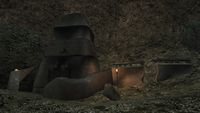
Ancient Mournhold architecture from the First Era
-
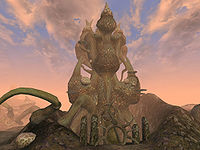
Telvanni architecture
-
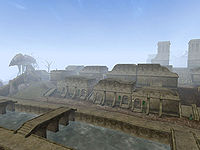
Hlaalu architecture
-
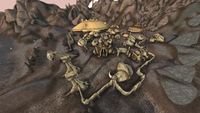
Redoran architecture
-
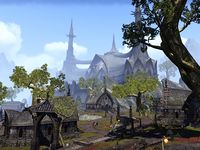
Mainland Morrowind Architecture
.jpg)


Transportation[edit]
The Dunmer have historically made use of nix-oxen[150] and guar as mounts.[117] Guar have even been bred for cavalry use.[151] Horses cannot adapt to Vvardenfell's harsh climate,[152] and are more useful as foodstuffs than mounts.[153][UOL 4]
The residents of Vivec City had the option of paying a gondolier to take them across the water to another canton.[154] Silt Striders were commonly used to ferry passengers by land on Vvardenfell. Passage by way of Strider was facilitated by caravaners.[155][156]
Food[edit]
- Main Article: Dunmer Cuisine

The Dunmer have learned over the ages to live in harmony with the inhospitable landscape of Morrowind, which is largely unsuited to agriculture. The dark volcanic terrain makes farming and hunting difficult. They gather kwama eggs, cultivate crops of ash yams, and maintain herds of domesticated guar, from which they harvest meat and hides. A wide variety of drinks also feature in Dunmer cuisine, made from saltrice and native fruits.
Sundials fashioned from shalk resin are used to keep track of cooking times in more complicated Dunmer recipes.

Language[edit]
Dark Elvish (also known as the Dark Elf language, Dunmeri, or Chimeric tongue) is the language spoken by the Dunmer of Morrowind. The language is derived from Ald Chimeris, which was spoken by their Chimer ancestors from the early First Era. Ald Chimeris is similar to Ayleidoon and descended from Ehlnofex. The Ashlanders speak in a dialect called Ashland.
The language is usually written in the Daedric alphabet, but also possesses its own Dark Elf script. See other Elvish languages for possible cognates.
Fashion[edit]
Physical appearance is rather important in some sects of Dunmer society, particularly with regards to the Great Houses. Some exalted members of the upper class will refuse to speak to those who are not well-dressed.[157]
When the Dark Elves were not allied with the Argonians, they often made use of their body parts in crafts, such as plates made of Argonian scales.[158] Fashion-forward Dunmer were finding ways to use Argonian horns to enhance their own appearance. One such use for extracted horns was bone blush, an ivory powder applied to the face. It was especially popular at the height of the Argonian-horn fashion trend of the Second Era, but became much rarer after the Ebonheart Pact was formed.[159]
Society[edit]

The Dunmer have been defined by their environment. Red Mountain looms as large in their collective thought as it does on the horizon.[17] Its ash and lava sculpted the attitudes of Vvardenfell's residents.[1] One does not have to travel far outside of many cities to find a giant Foyada cutting through the land like a scar. Native-born Dunmer tended to look down on "outlanders", which include both other races and Dunmer born outside of Morrowind, though the intensity of this ethnocentrism varies.[11] For thousands of years under the Tribunal, Dunmer society was structured much like the Chimer society had been: domestic Great Houses governed by Ruling Councils competed against each other for power and territory, while nomadic groups eschewed relative modernity for ancient tribal practices.[17][11][144]
Houses tend to rise and fall; many have faded to extinction over the years or sprouted up to challenge others.[1][144][160] At the close of the Third Era, the five most important houses were Hlaalu, Redoran, Telvanni, Dres and Indoril, each which had existed for thousands of years, since at least the War of the First Council.[161][17][144] While the details are limited, it is known that each of the Houses survived the cataclysms following the fall of the Tribunal Temple - with the exception of House Hlaalu, which lost its position to the previously-unknown House Sadras. In the most recent two centuries, House Redoran has become the most powerful of the Great Houses, taking the mantle the Hlaalu had held prior, and the Indoril before them.[162] Historically, Indoril has been so heavily involved with the Temple itself that it is hard to distinguish the two.[4] Following the collapse of the Tribunal Temple, House Indoril and the New Temple became regarded as one in the same.[163]
In the Ashlands, native tribes ruled without laws or government and lived strictly by codes, rituals, and ancient traditions usually dictated by a wise woman or seer and implemented by a clan leader. They lived in the deserts and plains of the Ashlands and Grazelands.
- → See also: Ashlanders
Prior to the Imperial occupation, Morrowind was an agrarian aristocracy: mostly free farmers, herders, and fishermen ruled by great houses and their noble councils. Since the Third Empire's occupation, especially on Vvardenfell, the Dunmer developed a mercantile economy on the model of the Empire, ruled by the Emperor, law, and legions, but driven by trade in crafts and goods.[164]
Practices and Norms[edit]
The peaceful status quo for Dunmer was considered quite brutal by westerners, even when led by living gods.[1][17] Political machinations are constant.[11] Assassinations are common, with the legally established Morag Tong providing services.[1][4] A huge amount of black market activity thrives along Morrowind's extensive coastlines. Dissidents to the Temple and other subversives over the years have been hunted and persecuted.[165][166]
Slavery used to be commonplace.[1] Mostly Khajiit or Argonian slaves were trafficked, although many men and mer were also enslaved.[1] Goblins were also seen as a significant slave "resource".[167] The Third Empire of Tiber Septim had banned slavery, but Dunmer were allowed to continue the practice in their entrance to the Empire as part of the Armistice, defining it as one of their own "sacred and traditional laws". Despite the claim that owning slaves was their right, many Dunmer still found the practice abhorrent and immoral,[168] and abolitionist groups continued to crop up within Dunmeri society.[169] By the end of the Third Era, King Helseth officially abolished slavery.[17]
Necromancy is practiced openly by some Dunmer, though never with Dunmer corpses. The corpses of animals, insects and other races are considered fair game for necromancers.[7]
Religion[edit]
Historically, the Dunmer have resisted worshipping the Aedra of the Nine Divines, whom they viewed as heretical apostasies. Occasionally, adherents of the Divines were punished severely.[170]
Following ALMSIVI's fall, the Dunmer were swift in re-establishing the traditions of ancestor and Daedra worship that Ashlanders had kept alive as the New Temple.[163][23][171] Dunmeri religious iconography has made use of the triangle and the pyramid throughout history, from the Chimer's worship of the Good Daedra,[172] to the Living Gods of the Dunmeri Tribunal.[173] Three is a lucky number associated with the Tribunal. Some objects are designed to do things in threes, such as muffin pans that bake only three muffins.[174]
Ancestor Worship[edit]

Ancestor worship is a hallmark of Dunmer culture. They believe the spirits of the dead live on in the mortal realm. The spirits know and can affect the future, speak with other spirits, and perform great feats of magic. As such, the Dunmer honor their deceased ancestors, giving them gifts and petitioning them for aid and protection.[175]
Recently deceased spirits have the freshest knowledge of their living relatives. Though they are the weakest of the ancestor spirits, they are the quickest to guide and protect their kin when called upon. The spirits of heroes and wise women are strong. The Dunmer pass down these ancestors' stories so they don't forget their wisdom. The worst of the ancestor spirits are evil and seek to do harm. These spirits are called ghosts, devils, and daemons.[175] Ghosts in particular are mad spirits: those who are forced to remain on the mortal plane for one reason or another. Spirits who are bound to the world willingly are less likely to go mad, but for those who do not consent to being bound, it is inevitable.[7] The Dark Elves ask their kinder ancestors to protect them from malevolent spirits. Unlike most other races, the Dunmer count the Daedra among their ancestors. The Daedra are the oldest and greatest of the ancestor spirits. Though powerful, they are dangerous and difficult to understand.[175]
House Dunmer have family shrines in their homes to venerate their ancestors. In poorer homes, the shrine may consist of a hearth or alcove where family relics are displayed, but wealthy House Dunmer set aside an entire room for their ancestors to use. The shrine is referred to as the "Waiting Door", and represents the door to Oblivion. When a family member dies, their remains are interred in ash pits within ancestral tombs. Small bones (such as finger bones) may be placed in the family shrine.[7] Traditionally, smaller communities maintain a hard-and-fast rule against non-Dark Elves being interred within family crypts. Larger cities like Mournhold or Ebonheart are more open-minded, but even in those cosmopolitan communities it's unlikely to find more than a handful of foreign names on the plaques beside a tomb.[176]
The Dark Elves' murky reputation among the human races is due in part to the practices and spirit magic associated with ancestor worship; they abhor the notion of summoning one's ancestors from beyond the veil. The Dunmer summon dead ancestors to consult their wisdom and ask them to protect their tombs, but they don't consider this necromancy. Necromancy outside of acceptable clan rituals is taboo. Other elves consider the Dunmeri practice of displaying the bones of deceased relatives in ash pits repugnant.[7]
- → See the main article: Ancestor Worship

The Good Daedra[edit]
The Three Good Daedra is the Dunmer (and before that, Velothi) term for three of the Daedric Princes: Azura, Boethiah, Mephala. These Princes are worshipped by the Dunmer as their ancestors. They are contrasted with the Bad Daedra, who are believed to test the Dunmer people's resolve and faith. To their worshippers, they were known as the Three Sisters.
The Tribunal replaced worship of the Good Daedra among the settled Dunmer following their apotheosis at the Battle of Red Mountain, and the three Good Daedra were thereafter known to the Tribunal Temple as the Anticipations of the three Tribunes. The Ashlander tribes refused to worship the Tribunal and remained true to their worship of the Good Daedra. House Indoril still honored the Good Daedra. The Clockwork Apostles however despised them for their fear of wisdom and order, calling them the False Princes and "the Anti-Gears that turn counter to the Nameless Will".
Following the deaths of the Tribunes and the rise of the New Temple, worship of the Good Daedra was restored and they became known as the Reclamations. They are now also called the True Tribunal or House of Reclamations, having reclaimed their place in the hearts of the Dunmer people from the "false Tribunal" that used their status to shield the True Tribunal from the public's minds. The name "Anticipations" is no longer used for them, as they have reclaimed their identity and no longer represent the patronage of the false Tribunal. Not all settled Dunmer turned away from Tribunal worship, although those few hidden sects who continued to worship the Tribunes as gods were persecuted by the New Temple for their heretical beliefs.
The Bad Daedra[edit]
The House of Troubles (also known as the Bad Daedra, Rebel Daedra, Adversaries, and Testing Gods) is the Dunmer (and before that, Velothi) term for four of the Daedra Lords: Mehrunes Dagon, Sheogorath, Malacath and Molag Bal. These Princes are the Bad Daedra as introduced to the Chimer by the teachings of Saint Veloth. Rebels whose purpose it is to test the resolve and faith of mortals, they are also known as the Four Corners of the House of Troubles. Ancient, alien temples dedicated to their worship can be found across Morrowind.
The Four Corners are known as enemy gods to the Dunmer. Molag Bal is a primary source of obstacles for the Dunmer people and their Chimer predecessors. He attempts to upset the Houses' bloodlines or ruin Dunmeri "purity". In the days of old Resdayn, Molag Bal was not worshipped so much as he was placated. Malacath tests the Dunmer for strength, Sheogorath tests for mental weakness and tempts Great Houses to treachery, while Mehrunes Dagon represents the dangerous terrain of Morrowind.
Tribunal Temple[edit]


The Tribunal Temple (or Temple to the Tribunal) was the native religion of the Dunmer of Morrowind. They worshipped Almalexia, Sotha Sil, and Vivec, known together as the Tribunal or Almsivi. Most people usually just call it "the Temple". They accept outlanders as members, but most of the few outlanders that do join, join only for the services provided. On Vvardenfell, the Temple District included the city of Vivec, the fortress of Ghostgate, and all sacred and profane sites (including those Blighted areas inside the Ghostfence) and all unsettled and wilderness areas, as the Treaty of the Armistice with the Empire maintained the island as a Temple preserve. In practice, this district included all parts of Vvardenfell not claimed as Redoran, Hlaalu, or Telvanni Districts.
The Temple maintained less than favorable relations with most of the Imperial guilds of Morrowind. However, it maintained strong relations with the pious House Indoril and House Redoran, and was friendly with House Dres and House Hlaalu. When the Tribunal fell apart, the Tribunal Temple underwent a reformation, becoming the New Temple.
The Great Houses generally followed the established Tribunal Temple, which preached faith in the Tribunal, respect for the "Good Daedra" who recognized the Tribunal, and veneration of ancestors.[7] There was some practicality to this: ancestral remains are used to power ghost fences to ward off spirits, notably the one created by the Tribunal at the closing of the Second Era that surrounded Red Mountain for hundreds of years to keep Dagoth Ur and his minions at bay.[1][7][11]
The Temple's priestly writings are called the "Hierographa". In the late Third Era, Archcanon Tholer Saryoni collected Vivec's most famous sermons and popular explanations of his Gospels. He used this information to write Saryoni's Sermons, which went on to become the best selling of the Temple's annotated texts; by 3E 427, a copy of Saryoni's Sermons could be found in most every Dunmeri household. Many editions were printed, the most elaborate of which were handsomely illuminated with Vivec's quotations from the Gospels for days, seasons, and festivals.[177]
Temple Saints[edit]
The Temple Saints are the most honored ancestors of the Dunmer, canonized by the Tribunal Temple for deeds they performed during their lifetime. They are celebrated as models of virtue and piety, often invoked for aid and protection. After the fall of the Tribunal, the three Tribunes were re-appointed as saints by the New Temple.
Greater Saints[edit]

The greater saints of the Temple are:[178]
- Saint Almalexia the Warden[178] – Healers, Teachers[179]
- Saint Sotha Sil the Magus[178] – Artificers, Wizards[179]
- Saint Vivec the Poet – Artists, Rogues[178][179]
- Saint Nerevar the Captain – Warriors, Statesmen,[12][178] Redoran[180][19][181]
- Saint Veloth the Pilgrim – Outcasts, Seekers,[178] Hlaalu[180]
Lesser Saints[edit]
The lesser saints of the Temple are:[12]
- Saint Rilms the Barefooted – Pilgrims, Beggars
- Saint Aralor the Penitent – Tanners and Miners
- Saint Seryn the Merciful – Brewers, Bakers, Distillers
- Saint Felms the Bold – Butchers, Fishmongers
- Saint Roris the Martyr – Furnishers and Caravaners
- Saint Olms the Just – Sailors, Chandlers, Clerks, Indoril[180]
- Saint Delyn the Wise – Potters, Glassmakers
- Saint Meris the Peacemaker – Farmers, Laborers
- Saint Llothis the Pious – Tailors, Dyers, Dres[180]
- Saint Vorys the Immolant – Telvanni[180][UOL 5]
- Saint Jiub the Eradicator of the Winged Menace[182]
The Ordinators[edit]
The Ordinators (sometimes called Temple Ordinators) were the holy guards and priest-soldiers of the Tribunal Temple led by the Alma Rula. They are divided into four distinct orders. The Order of the Watch provided guards for temples and shrines, and additionally acted as town guards in Temple-owned settlements such as Vivec City. They were responsible for enforcing Temple law, along with Imperial law following the Armistice. The Order of War (also known as the Militant Ordinators) fought the enemies of the Temple, with most War Ordinators traditionally stationed near Red Mountain to combat the forces of the Sixth House. The Order of the Inquisition identifies and suppresses heresy among priests and laymen within the Temple. The Order of Doctrine and Ordination are militant scholars who opposed the Nerevarine Prophecies and other dissident teachings.
Buoyant Armigers[edit]
The Buoyant Armigers were a small military order of the Tribunal Temple, exclusively dedicated to and answering to Lord Vivec. The Buoyant Armigers patterned themselves on Vivec's heroic spirit of exploration and adventure, and sought to emulate his mastery of the varied arts of personal combat, chivalric courtesy, and subtle verse. They served the Temple as champions and knights-errant, and were friendly rivals of the more solemn Ordinators. The majority of members who served in the order hailed from House Redoran, as their ideals were closely related.
The Dissident Priests[edit]
The Dissident Priests are a secretive cult consisting of Tribunal Temple members who dispute the Temple's dogmatic foundations and question the process of the Tribunal's elevation to become gods. They dispute Temple doctrine and are uneasy about the practices of the Ordinators. One of the chief disputes between the Temple and the Dissident Priests is that the Temple hides the truth from its followers. The Dissident Priests' outline and their beliefs are manifested in the book Progress of Truth.
Gallery[edit]
-
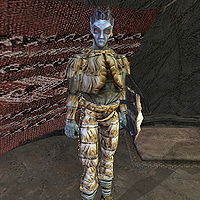
Ashlander in Morrowind
-
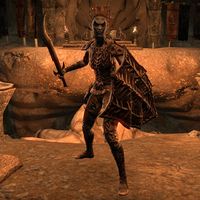
An Ashlander gulakhan in ESO
-
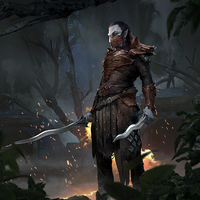
Ashlander in Legends
-
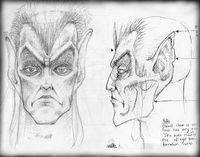
Concept art (Morrowind)
-
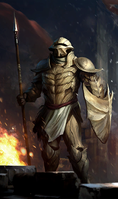
Redoran Enforcer
-
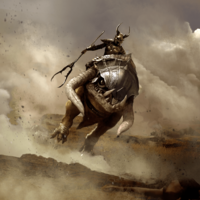
Bal Isra Warrider
-
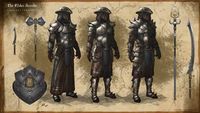
-
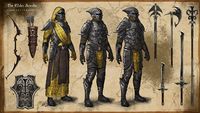
-
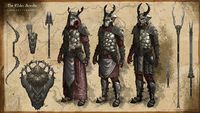
-
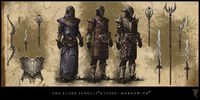
-
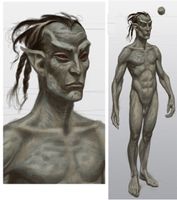
Concept art (Skyrim)


Appearances[edit]
-
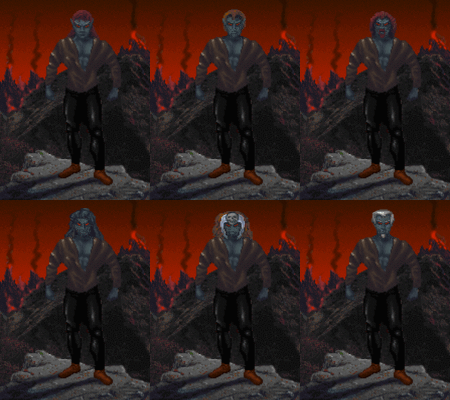
Male (Arena)
-
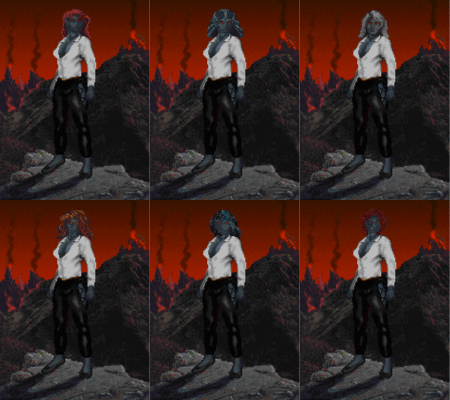
Female (Arena)
-
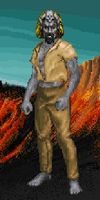
Male (Daggerfall)
-
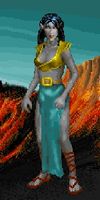
Female (Daggerfall)
-
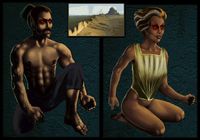
Male and female (Battlespire)
-
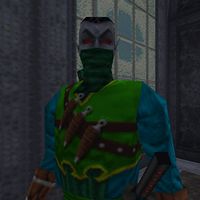
Male (Redguard)
-
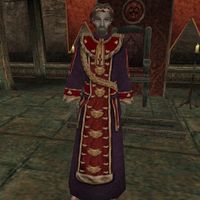
Male (Morrowind)
-
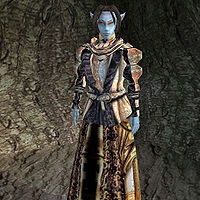
Female (Morrowind)
-
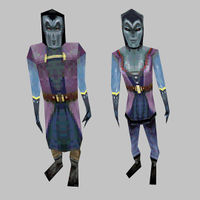
Male and female (Shadowkey)
-
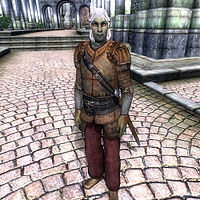
Male (Oblivion)
-
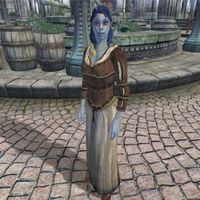
Female (Oblivion)
-
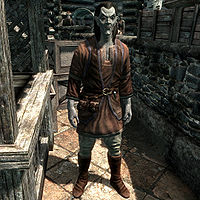
Male (Skyrim)
-
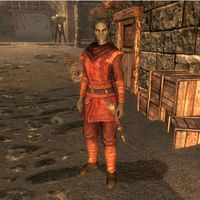
Female (Skyrim)
-
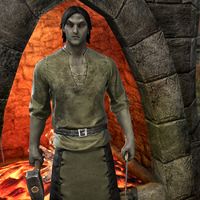
Male (ESO)
-
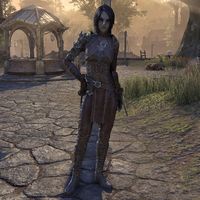
Female (ESO)
-
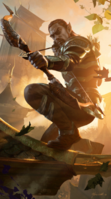
Male (Legends)
-
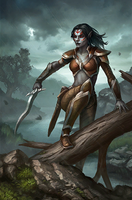
Female (Legends)
-
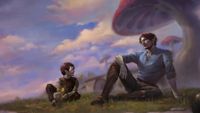
Male child (Legends)
-
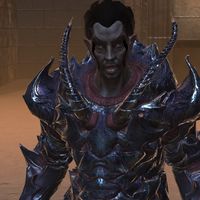
Male (Blades)
-
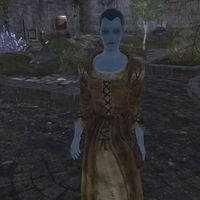
Female (Blades)


.jpg)
.jpg)


Notes[edit]
See Also[edit]
- Dunmer Names
- For a list of notable Dunmer, see here.
- For game-specific information, see the Arena, Daggerfall, Battlespire, Morrowind, Shadowkey, Oblivion, Skyrim, Elder Scrolls Online, Legends, and Blades articles. Also see the Redguard category.
Books[edit]
- A Short History of Morrowind by Jeanette Sitte — Some excerpts from the book's introduction and its section on Vvardenfell
- Ancestors and the Dunmer — An outdated guide for foreign visitors to Morrowind
- The Anticipations by Anonymous — Overview of the members of and the relationship between the Tribunal and the Daedra
- Crafting Motif 2: Dark Elf Style by Doctor Alfidia Lupus — Being notes by DoctorAlfidia Lupus for a series of pamphlets on the major cultural styles of Tamriel
- Great Houses of Morrowind — A description of the five great houses of Morrowind
- The House of Troubles — Chronicle of the Daedra who decided not to submit to the Tribunal
- Lives of the Saints by the Tribunal Temple — Listing and describing prominent saints of the Dunmer
- On Morrowind by Erramanwe of Sunhold — A historical synopsis of the Imperial conquest of Morrowind
- Pocket Guide to the Empire, 1st Edition: Morrowind — Imperial Geographical Society, 2E 864
- Pocket Guide to the Empire, 3rd Edition: The Temple: Morrowind — Imperial Geographical Society, 3E 432
- Progress of Truth by the Dissident Priests — A book questioning the doctrine of the Tribunal and even its godhood
- Vivec and Mephala — Informational book about ALMSIVI and Mephala
References[edit]
- ^ a b c d e f g h i j k l Pocket Guide to the Empire, 1st Edition: Morrowind — Imperial Geographical Society, 2E 864
- ^ Daggerfall variant of The Wild Elves — Kier-Jo Chorvak
- ^ Generic Dialogue on the topic of "Dunmer" in Morrowind
- ^ a b c d e f g h i On Morrowind — Erramanwe of Sunhold
- ^ Elynea Mothren's dialogue in Skyrim: Dragonborn
- ^ Ask Us Anything: Variety Pack 4 from the official ESO website
- ^ a b c d e f g h Ancestors and the Dunmer
- ^ Tilenra Sildreth's's dialogue in ESO
- ^ a b c d e f The Infernal City — Greg Keyes
- ^ Skin Blights By Any Other Name — Ravosa Ildram, House Healer
- ^ a b c d e f g h i A Short History of Morrowind — Jeanette Sitte
- ^ a b c Lives of the Saints — Tribunal Temple
- ^ a b Pocket Guide to the Empire, 3rd Edition: The Blessed Isle: Alinor and the Summersets — Imperial Geographical Society, 3E 432
- ^ a b c Varieties of Faith... — Brother Mikhael Karkuxor of the Imperial College
- ^ The Old Ways — Celarus the Loremaster
- ^ Exodus from Summerset
- ^ a b c d e f g h i j k Pocket Guide to the Empire, 3rd Edition: The Temple: Morrowind — Imperial Geographical Society, 3E 432
- ^ a b c d e The Battle of Red Mountain — Vivec
- ^ a b c Nerevar at Red Mountain — the Tribunal Temple
- ^ The Real Nerevar
- ^ Sorcerer Vunal's dialogue in ESO
- ^ Varieties of Faith: The Dark Elves — Brother Mikhael Karkuxor of the Imperial College
- ^ a b The Anticipations — Anonymous
- ^ Vivec and Mephala
- ^ Notes from Huleeya — Huleeya
- ^ Generic dialogue regarding the topic of Ashlander Culture in Morrowind
- ^ Shaali Kulun's dialogue in Online
- ^ Farseer Tirinaat's dialogue in Online
- ^ Strillian Callidus's dialogue in ESO: Murkmire
- ^ Keshu: Travels Beyond the Village, Part 1 — Peek-Ereel, Friend and Confidant to Keshu the Black Fin
- ^ Keshu: Travels Beyond the Village, Part 2 — Peek-Ereel, Friend and Confidant to Keshu the Black Fin
- ^ a b c Stormhold, City of Shadowfen — Cirantille
- ^ a b c Shadowfen loading screen text in Online
- ^ a b Reman II: The Limits of Ambition — High King Emeric
- ^ a b 2920, The Last Year of the First Era — Carlovac Townway
- ^ High King Emeric Answers Your Questions — High King Emeric
- ^ a b Pocket Guide to the Empire, 1st Edition: Prologue — Imperial Geographical Society, 2E 864
- ^ Mysterious Akavir
- ^ a b Fire and Darkness — Ynir Gorming
- ^ a b The Brothers of Darkness — Pellarne Assi
- ^ a b Ashur's dialogue in ESO: Elsweyr
- ^ Proconsul Beloren-Kaie's dialogue in ESO: Elsweyr
- ^ Pocket Guide to the Empire, 3rd Edition: All the Eras of Man, A Comprehensive History of our History — Imperial Geographical Society, 3E 432
- ^ Jarlsbane
- ^ Ix-Utha's dialogue during Enslaved in Death in ESO
- ^ Description of Dres Grandmaster Memorial Medal in ESO
- ^ Understanding House Dres — Solamar Dres, Grand Historian for the House
- ^ Great House Gold Chalice antiquity codex entries in ESO
- ^ a b c Pocket Guide to the Empire, 3rd Edition: The War with the Trees: Argonia and the Black Marsh — Imperial Geographical Society, 3E 432
- ^ a b Argonians Among Us — Sil Rothril
- ^ a b Aide Kjarc's dialogue in ESO
- ^ Pocket Guide to the Empire, 1st Edition: The Wild Regions — Imperial Geographical Society, 2E 864
- ^ Pocket Guide to the Empire, 1st Edition: The Elsweyr Confederacy — Imperial Geographical Society, 2E 864
- ^ Taken from an Interview with Retired Dark Elf Archaeologist, Drendisa Vedran — Drendisa Vedran
- ^ War of Two Houses — Drelisa Hlaalu, House Historian
- ^ Hallfrida's dialogue in The Elder Scrolls Online
- ^ a b Keshu — Peek-Ereel and Mee-See
- ^ Jorunn the Skald-King — Helgreir Lute-Voice, Bard of Windhelm
- ^ a b The Second Akaviri Invasion — Yngmaer Raven-Quill, Historian Royal of the Bards' College, Solitude
- ^ a b c Against the Snakes — Denskar
- ^ a b Unexpected Allies
- ^ Priestess Brela's dialogue in ESO
- ^ a b Pact Pamphlet: Congratulations!
- ^ From Argonian to Saxhleel — Vicecanon Heita-Meen
- ^ The Black Fin: Foreign Adventures, Part 2 — Mee-See, Squire and Personal Aide to Keshu the Black Fin
- ^ Frikkhild's dialogue in ESO
- ^ Byla Drethan's dialogue in ESO
- ^ The Improved Emperor's Guide to Tamriel: Black Marsh — Flaccus Terentius, 2E 581
- ^ Aide Pideelus's dialogue in ESO
- ^ Aide Diina's dialogue in ESO
- ^ a b Tiiril Alor's dialogue during Three Tender Souls in ESO
- ^ a b Gethis Omobar's dialogue during Three Tender Souls in ESO
- ^ a b Dendras Indalor's dialogue during Three Tender Souls in ESO
- ^ Events of Getting to the Truth in ESO
- ^ Plan to Defeat Dagoth Ur — Vivec
- ^ Orvas Dren's dialogue in Morrowind
- ^ The Arcturian Heresy — The Underking, Ysmir Kingmaker
- ^ Brown Book of 3E 426
- ^ a b c d e f Events of Morrowind
- ^ Rumors in Oblivion
- ^ Lymdrenn Tenvanni's Journal — Lymdrenn Tenvanni
- ^ a b c Adril Arano's dialogue in Dragonborn
- ^ Lord of Souls — Greg Keyes
- ^ Nix-Hound Creation Club add-on in Skyrim
- ^ Nix-Hounds: A Manual for New Owners
- ^ Bal Foyen Nix-Hound Crown Store Showcase description in ESO
- ^ Five Songs of King Wulfharth
- ^ Huntmaster Sorim-Nakar's dialogue during Tarra-Suj Hunt in ESO: Morrowind
- ^ Pony Guar pet description in ESO
- ^ Pugilist Puppet item description in ESO
- ^ Pristine Wax Lady item description in ESO
- ^ Windhelm guard dialogue in Skyrim: "The Dunmer get their drinks down at the New Gnisis Cornerclub. Why they can't just call it a tavern is beyond me..."
- ^ Generic dialogue on the topic of Morrowind in Morrowind
- ^ Generic dialogue on the topic of Morrowind Lore in Morrowind
- ^ Generic dialogue on the topic of MY Trade for Paupers in Morrowind
- ^ Mirri Elendis's dialogue during Shattered and Scattered in ESO: Blackwood
- ^ Breda's dialogue in ESO
- ^ Interview with a Dark Elf
- ^ Food in Skyrim: Ash Hopper Leg, Ash Hopper Meat
- ^ Ash-Hopper Dumplings on Scathecraw in ESO
- ^ Ash Hopper Jelly as an alchemy ingredient in Skyrim
- ^ Naryu's Journal/Vvardenfell — Naryu Virian
- ^ Amber Ash Hopper pet description in ESO
- ^ Generic dialogue on the topic of Kagouti Hide in Morrowind
- ^ Fancy Mazte Pitcher item description in ESO
- ^ Fancy Redoran Porridge Bowl item description in ESO
- ^ Set of Gilt-Edged Mazte Glasses item description in ESO
- ^ Drinar Varyon's redware pot-filled house and his insistence on studying native Dunmeri pottery in Morrowind
- ^ Morrowind Fauna, Part One — Holia Asellio
- ^ a b The Improved Emperor's Guide to Tamriel: Stonefalls and Deshaan — Flaccus Terentius, 2E 581
- ^ "Shalk Blue" Tattoo Ink item description in The Elder Scrolls Online
- ^ Frinnius Posuceius's dialogue in Morrowind
- ^ Settling the Debate — Ralevyn Nerano
- ^ Netch Leather dropping from netches and its uses in Morrowind
- ^ Netch Jelly dropping from netches and its uses in Dragonborn
- ^ Kyne's Challenge: A Hunter's Companion
- ^ a b Green Narsis Guar mount description in ESO
- ^ Dwarven Guar mount description in ESO
- ^ Generic Dialogue G about Guar Hide in Morrowind
- ^ Vvardenfell Then and Now on the official ESO website
- ^ Dark Elves, Dark Hearts — Bakozog gro-Shakh
- ^ a b A Petition for the Mighty Nix-Ox — Kylia Thando
- ^ a b Generic dialogue on the subject of Eggmines in Morrowind
- ^ Generic dialogue on the topic of Food in Morrowind in Morrowind
- ^ Kwama Mining for Fun and Profit — Dorayn Redas, House Hlaalu
- ^ Generic dialogue on the topic of kwama cuttle in Morrowind
- ^ Orona's dialogue during Carving Cuttle in ESO
- ^ Garothmuk gro-Muzgub on the topic of heavy armor styles in Morrowind
- ^ Manual of Armor
- ^ a b Garothmuk gro-Muzgub on the topic of short bows in Morrowind
- ^ Garothmuk gro-Muzgub's dialogue regarding the topic of ebony in Morrowind
- ^ Garothmuk gro-Muzgub on the topic of glass in Morrowind
- ^ The Worth of Glass — Raleth Heladren
- ^ Garothmuk gro-Muzgub on the topic of chitin in Morrowind
- ^ Garothmuk gro-Muzgub on the topic of war axes in Morrowind
- ^ Garothmuk gro-Muzgub's dialogue regarding the topic of medium armor styles in Morrowind
- ^ Garothmuk gro-Muzgub's dialogue regarding the topic of exotic armor types in Morrowind
- ^ Garothmuk gro-Muzgub's dialogue regarding the topic of tantos in Morrowind
- ^ Garothmuk gro-Muzgub's dialogue regarding the topic of shortswords in Morrowind
- ^ Garothmuk gro-Muzgub's dialogue regarding the topic of longswords in Morrowind
- ^ Garothmuk gro-Muzgub's dialogue regarding the topic of maces in Morrowind
- ^ Garothmuk gro-Muzgub's dialogue regarding the topic of spears in Morrowind
- ^ Garothmuk gro-Muzgub's dialogue regarding the topic of martial arts in Morrowind
- ^ a b c d e Great Houses of Morrowind
- ^ Madam Firilanya's correspondence mentions the Telvanni towers
- ^ a b c Events of ESO: Morrowind
- ^ a b Events of ESO
- ^ Basalt Table-Game Set antiquity codex entry in ESO: Greymoor
- ^ a b Fort Arand loading screen text in ESO
- ^ The description of the Nix-Ox War-Steed in ESO
- ^ Banded Guar Charger mount description in ESO
- ^ Garothmuk gro-Muzgub's dialogue regarding the topic of sabers in Morrowind
- ^ Dunmeri Jerked Horse Haunch recipe in ESO
- ^ Gondoliers as a method of transportation across Vivec City in Morrowind
- ^ Silt Striders as a method of transportation across the map in Morrowind
- ^ Silt Strider Caravaner's Log
- ^ Milie Hastien's dialogue regarding clothes in Morrowind
- ^ Argonian Scale Beetle Cheese Plate item description in ESO
- ^ Bone Blush item description in ESO
- ^ The Battle of Molag Beran
- ^ The War of the First Council — Agrippa Fundilius
- ^ Lleril Morvayn's dialogue in Dragonborn
- ^ a b The Reclamations — Thara of Rihad
- ^ generic dialogue regarding the topic of Morrowind Lore in Morrowind
- ^ The House of Troubles
- ^ Progress of Truth — Dissident Priests
- ^ Aldryn Dres' dialogue in ESO
- ^ Omaren Trial Transcript
- ^ Generic Dialogue on the topic of "Abolitionists" from Morrowind
- ^ Ordinator Edict: Mandate Sixteen — Inquisitor Nivos Uveran
- ^ Vivec's conversation with the Nerevarine after of Dagoth Ur's defeat in Morrowind
- ^ Appearance of the Tri-Angled Truth Altar and its related Antiquity Codex entries in ESO
- ^ Appearance of the pyramid-shaped monoliths in the cloisters of the Mournhold Temple in ESO
- ^ Gorapple Muffin Pan item description in ESO
- ^ a b c Generic dialogue regarding the topic of Ancestors in Morrowind
- ^ Loremaster's Archive - House Telvanni — Divayth Fyr
- ^ Saryoni's Sermons — Archcanon Tholer Saryoni
- ^ a b c d e f Generic dialogue about greater saints in Morrowind
- ^ a b c The Living Gods — Durillis the Theologian
- ^ a b c d e Mottos of the Dunmeri Great Houses — Vilyn Girith
- ^ Saint Nerevar
- ^ Saint Jiub's Opus — Jiub
- ^ Ebony Mail quest in Arena
Note: The following references are considered to be unofficial sources. They are included to round off this article and may not be authoritative or conclusive.
- ^ ZOS Correspondence
- ^ Ted Peterson's posts in Playing Houses
- ^ Morrowind Daedric Helms Concept Art
- ^ Gary Noonan's Post about horses in Morrowind
- ^ ESO Writing Team r/elderscrollsonline Ask Us Anything
|
|||||||||||||||||||||||||||||||||||||||||
![[Content is available under Attribution-ShareAlike]](http://en.uesp.net/w/images/4/4d/Somerights.png)
